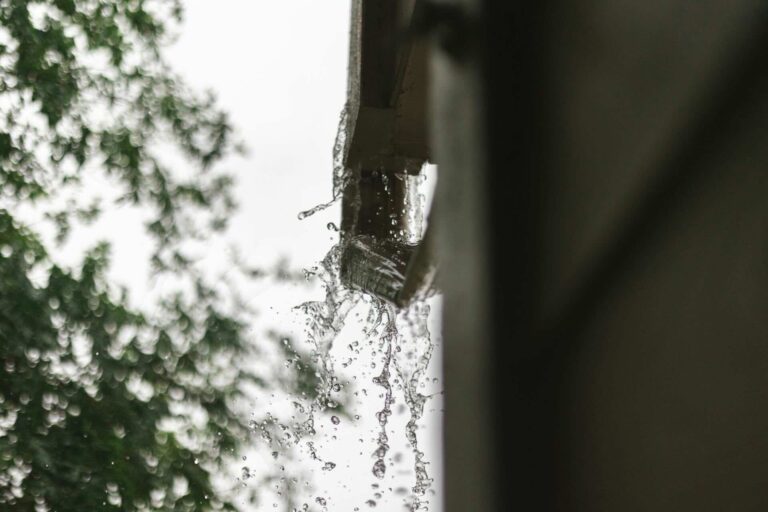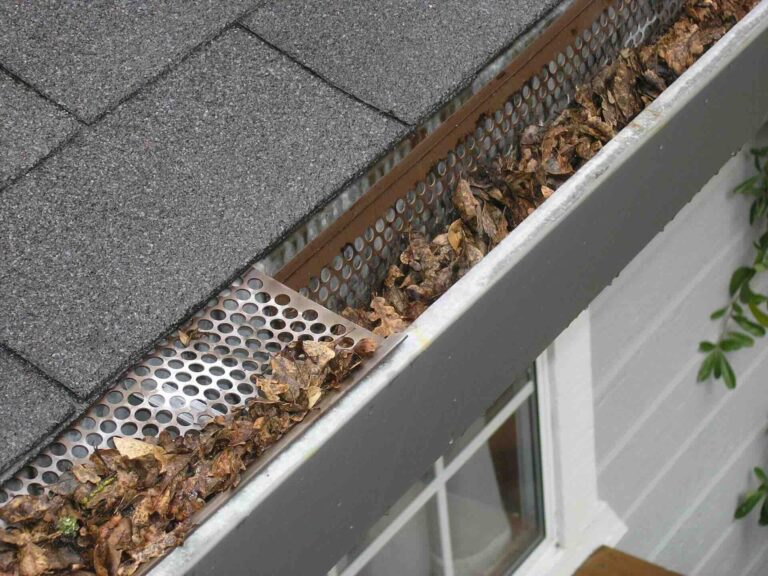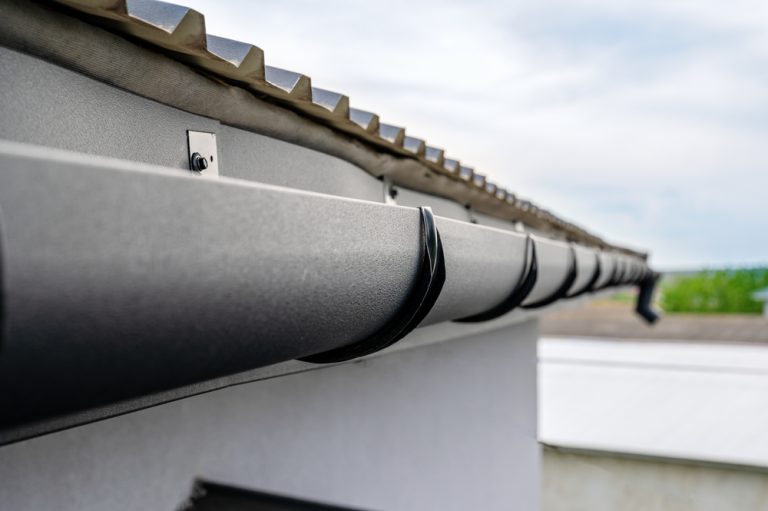










Gutters are the thin channels along your roofline that catch rainwater and carry it safely away from your house. In the Southeast, where annual rainfall runs well above the national average, gutters are one of the most important systems in your home.
Key Takeaways
Gutters are a roof water management system, not just metal trim. They catch rainwater from your roof, channel it through downspouts, and direct it several feet away from your foundation.
One inch of rain on a 2,000-square-foot roof produces roughly 1,250 gallons of water, and Southeast homes shed tens of thousands of gallons per year because Atlanta, Nashville, Charlotte, and Birmingham all average 47-54 inches of rainfall annually.
Gutters protect five expensive parts of your home: the foundation, the basement or crawl space, the siding, the landscaping, and the roof edge itself (fascia, soffit, and lower shingles).
Foundation damage is the costliest risk. Southeast red clay soils expand when wet and contract when dry, and uncontrolled roof runoff accelerates cracking, settling, and basement moisture problems.
Downspouts should discharge at least 5 feet from the foundation per EPA Indoor airPLUS standards though 10 feet is better for homes on clay soils or with basements.
Building codes require controlled roof water disposal, especially in areas with expansive soils. Even where gutters aren’t legally mandatory, they’re almost always practically necessary.
Three Southeast factors make gutters nonnegotiable: heavy year-round tree debris (pine needles, oak leaves, sweetgum), high-intensity rainfall bursts that can drop 2-4 inches in an hour, and expansive clay soils.
Watch for warning signs during storms: water sheeting over the edge, sagging gutters, pooling at the foundation, mud splashes on siding, rust streaks, and rotting fascia boards.
Clean at least twice a year (late spring and late fall), check downspout extensions after every major storm, and consider gutter guards if you have heavy tree cover.
Your roof can handle a thunderstorm. Your walls can handle humidity. Your foundation can handle the weight of your entire house. So why does a two-inch strip of aluminum hanging off the edge of your roof matter so much?
Because without it, every single rainstorm attacks the one part of your home you can’t see, can’t easily fix, and absolutely cannot live without: the foundation underneath it.
What Is a Gutter?
A gutter is a shallow, open-top channel installed along the edges of your roof. Its job is simple in concept and surprisingly sophisticated in execution: catch the water running off your roof, move it to a predetermined exit point, and get it away from your house.
The full system has three working parts:
- Gutter—Horizontal trough that runs along your eaves
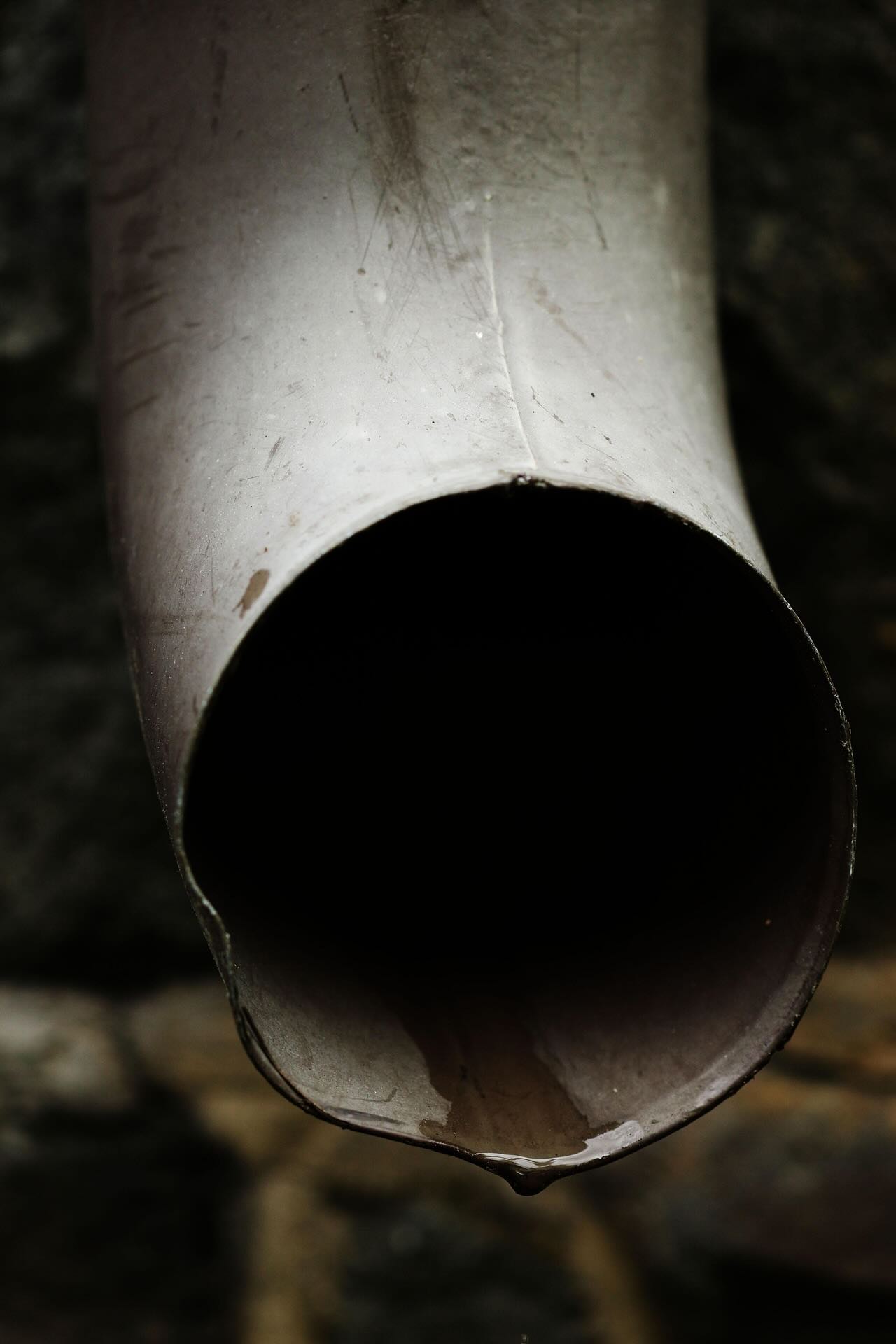
- Downspouts—Vertical pipes that carry collected water down to ground level
- Extensions or splash blocks—Pieces at the bottom that push water several feet away from your foundation
Together, they form what engineers and builders call a roof water management system, a fancy term with a critical function.
Why Rain Is More Dangerous Than It Looks
Most homeowners don’t know that just one inch of rain on a 2,000-square-foot roof produces about 1,250 gallons of water.
Now consider what the Southeast actually gets in a year. According to the National Oceanic and Atmospheric Administration (NOAA)’s National Centers for Environmental Information, Atlanta averages around 50 inches of rainfall annually. Nashville gets roughly 47. Birmingham clocks in near 54. Charlotte and Raleigh sit in the high 40s. All of these numbers are above the U.S. national average of about 30 inches.
That means that a typical Southeast home sheds tens of thousands of gallons of water off its roof every year. That water has to go somewhere. Gutters decide where.
What Gutters Actually Protect (It’s More Than You Think)
Most homeowners think of gutters as roof accessories. They’re not. They protect at least five separate parts of your home, and some of them are expensive.
- Foundation—When water pours off an unguttered roof, it lands in a concentrated strip around the perimeter of your home. Over time, that saturates the soil, and saturated soil moves. According to the U.S. Department of Energy’s Building America Solution Center, poor water management around a foundation is one of the leading causes of cracking, settling, and basement moisture problems. In the Southeast, where many homes sit on expansive red clay soils that swell when wet and shrink when dry, uncontrolled roof runoff can accelerate foundation problems dramatically.
- Basement or crawl space—The Federal Emergency Management Agency (FEMA) reports that flooding has affected 99 percent of U.S. counties, and even noncatastrophic water intrusion leads to mold, mildew, warped flooring, and ruined belongings. FEMA specifically recommends that homeowners “routinely clean and maintain gutters, downspouts, and splash pads so rainwater flows away from your house” as a core flood-protection step.
- Siding and exterior walls—Water cascading directly off a roof splashes mud, soil, and debris onto siding. Over the years, that causes staining, paint failure, rot on wood trim, and damage to the lower courses of vinyl, fiber cement, and lap siding.
- Landscaping—Concentrated roof runoff erodes mulch, drowns plantings, and carves trenches through flower beds. Properly routed gutters keep your landscaping where you put it.
- Roof—Without gutters to catch and redirect water, the edges of your roof, the fascia, soffit, and lower shingle courses, stay constantly wet during storms. Over time, that moisture wicks back under the shingles, rots the fascia boards, and creates the kind of hidden damage that shows up years later as a much bigger roofing bill.
Science of Where the Water Needs to Go
Codes and industry standards don’t leave this to guesswork. There are actual engineering rules for how far water should be moved from your foundation.
The International Residential Code (IRC), which forms the basis for residential building codes across Georgia, Tennessee, Alabama, and North Carolina, requires that the ground around a home slope away from the foundation be at least six inches over the first ten feet. That grading alone isn’t enough, though; it works in combination with gutters.
The Environmental Protection Agency (EPA)’s Indoor airPLUS program, a voluntary construction specification widely used by quality-focused builders, goes further. It requires that gutters and downspouts “empty into lateral piping on a sloping finish grade a minimum of 5 ft. from foundation, or into a sewer or rainwater management system.” In other words: getting water to the ground near your house isn’t the goal. Getting it away from your house is.
The National Association of Home Builders (NAHB) and the American Society of Home Inspectors (ASHI) both recommend downspout extensions that carry water at least five feet from the foundation, with ten feet being preferable on homes with basements or high-clay soils. Most homes in the Southeast qualify for that “ten feet” recommendation because of our clay-heavy ground.
Are Gutters Required by Code?
Short answer: it depends. The details are where it gets interesting.
The International Building Code (IBC) doesn’t flat-out require gutters on every home. It requires roof water drainage, and gutters are the most common way to provide it. Some jurisdictions in the Southeast require gutters on new construction while others leave it to the builder’s discretion. The 2021 International Residential Code (IRC) does require a controlled method of roof water disposal for homes in areas with expansive or collapsible soils, which describes a lot of Southeast real estate.
This means that even when gutters aren’t legally mandatory where you live, they’re almost always practically necessary. The alternatives are concrete perimeters, extended overhangs, and engineered splash zones, but they cost more, looks less conventional, and still have to meet the same water-management goal.
Signs that Your Gutters Aren’t Doing Their Job
You don’t need a professional inspection to spot early warning signs. Watch for any of the following during or just after a rainstorm:
- Water sheeting over the edge instead of flowing through the downspout; that’s a clog, a leak, or an undersized gutter.
- Visible sagging or pulling away from the fascia; fasteners are failing or the gutters are holding debris weight they shouldn’t be.
- Water pooling at the base of the house near a downspout; your extension is too short or missing.
- Mud splashes on lower siding after a storm; the gutter isn’t catching the runoff at all.
- Rust streaks, peeling paint, or rotting fascia boards behind the gutters themselves; the gutter is leaking from the back.
- Mildew or erosion lines in flower beds or mulch, below the gutter run.
Any of those signs deserves attention before the next storm, not after.
Southeast Factor: Why Our Region Is Different
Homeowners moving from other parts of the country often underestimate how hard Southeast weather is on a gutter system. Three specific conditions set our region apart:
Those three conditions together explain why gutter performance in the Southeast isn’t a “nice to have.” It’s a structural safeguard.
- Heavy tree debris—Loblolly pines drop needles year-round. Live oaks shed in spring and fall. Sweetgum trees scatter those famously annoying spiky balls into every nearby gutter they can find. Unlike regions with cleaner deciduous shedding, the Southeast gives your gutters a constant low-grade workload punctuated by massive seasonal drops.
- High-intensity rainfall events—NOAA precipitation frequency data shows that much of the Southeast can receive two to four inches of rain in a single hour during summer thunderstorms. Gutters here aren’t just sized for annual totals; they need capacity for those short, violent bursts.
- Red clay soils—The Piedmont region running through most of Georgia, the Carolinas, and into Alabama sits on clay that expands when wet and contracts when dry. Uncontrolled roof runoff accelerates that cycle right next to your foundation, which is precisely where you don’t want it.
Basic Maintenance that Doubles Your Gutters’ Lifespan
A few simple habits will keep your system working the way it’s supposed to:
- Clean your gutters at least twice a year, typically in late spring after pollen season and in late fall after leaf drop. Homes surrounded by pines often need three or four cleanings a year.
- Check downspout extensions after every major storm. They get knocked loose by wind, yard work, or pets.
- Walk the perimeter during rain a couple of times a year. Watching water flow through the system tells you more than any inspection from the ground.
- Look at the fascia boards from ground level every few months. Discoloration, warping, or paint failure behind the gutter indicates that water is getting somewhere it shouldn’t.
- Consider gutter guards if you have heavy tree cover. They don’t eliminate maintenance, but they dramatically reduce it and extend the life of the system underneath.
Sources of information:
- Federal Emergency Management Agency (FEMA): Protect Your Home from Flooding
- International Association of Certified Home Inspectors (InterNACHI®): Inspecting Gutters and Downspouts
- National Association of Home Builders (NAHB): TechNote: Rain & Groundwater Management: Reducing the Risk of Water Intrusion & Damage
- National Oceanic and Atmospheric Administration (NOAA): Atlas 14 Point Precipitation Frequency Estimates
- National Weather Service: (NWS): Southeast Rainfall Climatology
- U.S. Department of Energy (DOE): Building America Solution Center: Gutters and Downspouts
- U.S. Department of Energy (DOE): Building Science Education: Building Basics: Land Is Graded: Final Grade Slopes Away from Foundation
- U.S. Environmental Protection Agency (EPA): Indoor airPLUS Verification Checklist
Frequently Asked Questions
Still have questions about gutters and how they protect your Southeast home? Here are the answers to the questions homeowners ask us most often.
What are gutters and what do they do?
Gutters are the channels along your roofline that catch rainwater and carry it through downspouts safely away from your home. Their job is to prevent roof runoff from damaging your foundation, basement, siding, and landscaping.
Are gutters required by building code in Georgia, Tennessee, Alabama, or North Carolina?
Not universally. The International Residential Code, which forms the basis for residential codes in all four states, requires controlled roof water disposal, but doesn’t always mandate gutters specifically. Jurisdictions in areas with expansive soils, common across the Piedmont region, often do require them on new construction. Even where they’re not legally mandatory, gutters are almost always the most practical way to meet drainage requirements.
How far should gutter downspouts discharge water from my foundation?
The EPA’s Indoor airPLUS construction specifications require a minimum of 5 feet from the foundation on a sloping grade or 10 feet if the water drains into an underground catchment system. Most experts recommend 10 feet for Southeast homes because of our clay-heavy soils, especially if you have a basement or crawl space.
What happens if I don’t have gutters on my house?
Rain pours off the roof in a concentrated strip around your home’s perimeter, saturating the soil next to your foundation. Over time this leads to foundation cracks, settling, basement or crawl space moisture, rotted fascia boards, stained and damaged siding, and eroded landscaping. In the Southeast’s clay soils, these problems develop faster than in regions with better-draining ground.
How often should I clean my gutters?
At least twice a year, typically in late spring after pollen season and in late fall after leaf drop. If your property has heavy pine coverage, live oaks, or sweetgum trees, 3-4 cleanings a year is more realistic. After major storms, always check that downspout extensions are still in place and clear of debris.
Can clogged gutters actually cause roof leaks?
Yes. When gutters clog, water backs up under the lower shingle courses, saturating the fascia and roof deck edge. Over time this leads to wood rot, shingle failure, and leaks that appear inside your home, often far from where the actual damage started. It’s one of the most common hidden causes of roof problems in the Southeast.
What are the warning signs I need new gutters instead of just a cleaning?
Visible sagging or pulling away from the fascia, rust streaks or holes in the gutter material, peeling paint on the gutter or fascia, persistent leaks at seams and corners, and water stains on siding directly below the gutter run. If cleaning doesn’t restore proper water flow, the system itself is likely failing.
Do I need gutter guards in the Southeast?
If your property has significant tree coverage, especially pines, oaks, or sweetgums, gutter guards pay off quickly. They dramatically reduce cleaning frequency, prevent the debris-driven clogs that cause most gutter failures, and extend the lifespan of the gutter system underneath. They don’t eliminate maintenance entirely, but they transform it from a seasonal chore into an annual check.
How long do gutters typically last in the Southeast?
A properly installed aluminum gutter system in the Southeast typically lasts 20 years or more with regular maintenance. Copper gutters can last 50 years or longer. Heavy tree debris, intense UV exposure, and repeated freeze-thaw cycles in northern parts of Tennessee and North Carolina can shorten lifespan while well-maintained systems in protected locations often exceed the average significantly
Time to Check Your Gutters?
Gutters are the least glamorous part of your home and arguably one of the most important. They don’t add curb appeal. Nobody tours a house and says, “Wow, great gutters.” But they do the quiet work of keeping every other expensive part of your home: the foundation, basement, siding, and landscaping safe from a threat that never stops.
In the Southeast, where we get 50-plus inches of rain a year, red clay soils, and summer storms that can drop an inch of water in twenty minutes, that quiet work is a big deal.
If you’ve been putting off thinking about your gutters, now’s a good time to stop putting it off. Walk your property during the next rainstorm. Watch where the water goes. If it’s going anywhere other than five to ten feet from your foundation, your home’s trying to tell you something. If you’d like a professional evaluation, request an appointment today, and we’ll meet to assess your specific needs, explore options, and create a customized plan that fits your budget and timeline.