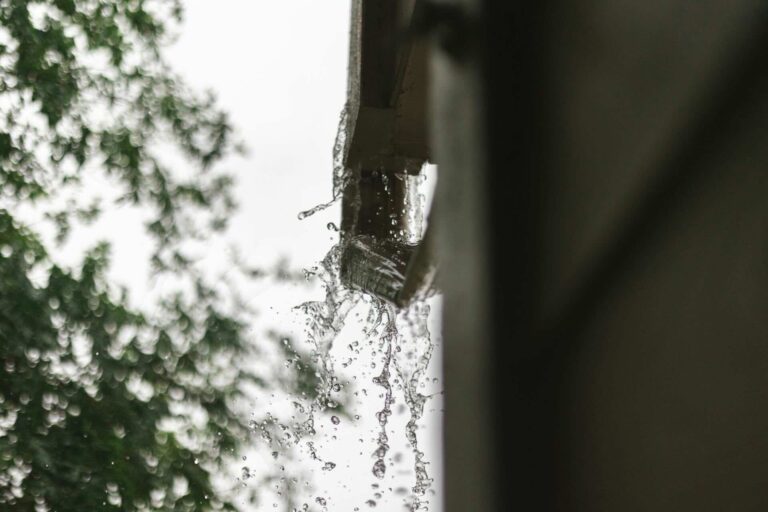










The best gutter guards for homes across Alabama, Georgia, North Carolina, and Tennessee are professional-grade micromesh systems. They handle the region’s heavy rainfall and fine debris mix (e.g., pine needles, shingle grit, and pollen) better than foam, brush, or basic screen guards, and they’re the only type of gutter guards that consistently earns lifetime warranties from reputable manufacturers.
Key Takeaways
Micromesh gutter guards are the top performers for the Southeast’s mix of heavy rain and fine debris
Expect to pay $7.50 to $14 per linear foot installed for a quality system, which comes to about $1,500 to $3,500 for most homes
Cheap foam and brush guards often fail within a few years in Southeast humidity while pro-installed micromesh typically lasts 20+ years
The right guard depends on your specific trees, roof pitch, and gutter size, not on the highest star rating online
Always verify licensing, liability insurance, and a written transferable warranty before you sign
What if the cheapest gutter guard on the shelf is actually the most expensive choice you can make? That’s exactly what happens to thousands of Southeast homeowners every year; they save a few hundred dollars upfront on foam or brush inserts, then spend thousands repairing the water damage that those systems failed to prevent.
This is a comparison guide, not a sales pitch. We’ll walk through the five main types of gutter guards, what they actually cost, where each one wins and loses, and how to match the right system to your roof, your trees, and your climate.
Why the Southeast Is Harder on Gutter Guards Than Most Regions
Before you compare systems, it helps to understand what you’re asking your gutter guards to do.
The Southeast gets more rain than almost anywhere else in the country. Atlanta averages around 50 inches a year, Nashville about 47, Birmingham over 55, and Charlotte around 43, and all are well above the national average of roughly 30 inches, according to NOAA’s U.S. Climate Normals latest 30-year period (1991–2020).
That water doesn’t fall evenly. Spring and summer thunderstorms routinely drop one to two inches per hour, and, when gutters are clogged, that water sheets over the edge and runs straight down along your foundation. The Environmental Protection Agency (EPA)’s stormwater management guidance notes that runoff from impervious surfaces like rooftops builds volume and speed quickly, and poorly managed runoff is a primary contributor to residential water damage and erosion.
Now add the region’s tree canopy. Metro Atlanta alone is over 47% tree-covered. Oaks, sweetgums, maples, and pines across Birmingham, Huntsville, Charlotte, Raleigh, Knoxville, Chattanooga, and Nashville drop broad leaves in fall, seed pods and pollen in spring, and pine needles year-round.
A gutter guard that handles dry Western conditions can fail completely under those loads.
5 Main Types of Gutter Guards Compared
Not all gutter guards are built for the same job, and the gap between the best and worst performers is wider than most homeowners realize. Let’s examine how each type of gutter guard holds up against the Southeast’s specific challenges: heavy rainfall, dense tree canopy, fine debris like pine needles and shingle grit, sustained humidity, and the occasional ice event in higher elevations. We’ll cover what each guard is, where it shines, where it falls short, and the kind of home it actually fits.
1. Micromesh Gutter Guards, Top Performer
A precision-engineered system, micromesh gutter guards are built around an extremely fine stainless steel mesh, typically with openings between 50 and 275 microns, small enough to filter out particles roughly the width of a human hair. The mesh is bonded to a rigid aluminum frame that mounts on top of your existing gutter, either clipping under the front lip or anchoring to the fascia board.
Most quality systems use surgical-grade stainless steel for the mesh, which won’t rust or corrode, paired with anodized or powder-coated aluminum for the frame, which won’t warp or oxidize. The whole assembly sits flush with your roofline, virtually invisible from the ground, and creates a continuous filter that lets rainwater pass through while sending leaves, needles, seed pods, and grit sliding off the surface.
Strengths include:
- Blocks virtually everything: leaves, pine needles, seed pods, pollen, and roof grit
- Handles heavy downpours without overshoot when properly pitched
- 20+-year lifespan with stainless steel mesh and aluminum frame
- Typically comes with a lifetime product warranty
Weaknesses include:
- Highest upfront cost
- Requires professional installation
- Surface debris may need a light brush-off once or twice a year
Micromesh gutter guards work best for nearly every Southeast homes. Homes shaded by oaks, sweetgums, maples, or pines, the dominant canopy across Atlanta, Charlotte, Birmingham, and Nashville, see the biggest performance gap because micromesh is the only type of gutter guard that reliably blocks both broad leaves and fine needles. Two-story homes and steeply pitched roofs also favor micromesh because the system handles fast-moving water without overshoot.
Homes in storm-prone corridors that catch frequent severe thunderstorms such as Huntsville’s spring season, Chattanooga’s summer fronts, or the Atlanta metro’s afternoon downpours benefit from the high-flow capacity. If you plan to stay in your home long-term or want a transferable warranty that adds resale value, the 20+-year lifespan and lifetime product warranties make this the system that pays back over time rather than the one you have to replace twice.
2. Reverse-Curve (Surface Tension) Gutter Guards
Consisting of a solid metal hood, usually aluminum or copper, reverse-curve gutter guards wrap over the top of the gutter and curl down at the front edge. The design relies on a physics principle called surface tension, sometimes marketed as the Bernoulli principle: water naturally clings to the curved surface, follows it around the lip, and drops into a narrow slot behind the curve while leaves and twigs lose grip and tumble off the front.
No mesh is involved; just a sloped solid surface and a narrow intake gap. Reverse-curve guards are usually installed by sliding the back edge under the first row of roof shingles, which creates a continuous waterproof seal, but can affect roof warranties if the installer isn’t careful.
Strengths include:
- Effective in moderate rainfall
- Blocks large debris well
- Durable aluminum construction
Weaknesses include:
- Heavy Southeast downpours can cause water to shoot past the opening
- Installation often requires lifting the first row of shingles; it may affect your roof warranty
- Visible from the ground (some homeowners don’t like the look)
- Small debris can still enter through the opening
Reverse-curve gutter guards are best for homes dealing with broad-leaf debris (but not pine needles or fine seeds), moderate roof pitches that don’t accelerate water beyond the intake’s capacity, and rainfall intensities that fall in the moderate-to-heavy range rather than extreme. Single-story ranches under hardwood-only canopy in older Charlotte or Raleigh neighborhoods are often a reasonable fit.
Homes where the look matters less than the performance also work as the curved hood is more visible from the ground than a flat micromesh panel.
However, reverse-curve gutter guards struggle to cope with high-volume Southeast storms in which water can shoot past the intake, in heavy pine-needle environments where small debris slips through the slot, and on steep roofs where the water arrives too fast for surface tension to redirect it cleanly. If your installer suggests this type of gutter guard, ask specifically about flow ratings and shingle-warranty implications before signing.
3. Screen Gutter Guards
Simple panels, usually aluminum, galvanized steel, or rigid plastic, screen gutter guards are punched with holes or slots ranging from about a quarter-inch to half-inch wide. The panels either drop into the gutter channel and rest on the lip, snap into place under the first row of shingles, or get screwed directly onto the front edge of the gutter.
Screen guards are the original gutter protection format and still the most common option at hardware stores and home centers because they’re cheap to manufacture and straightforward for a do-it-yourself (DIY) installer to handle. There’s just a coarse barrier that stops large debris from falling in, with no surface tension principle, fine filtration, or engineered flow path.
Strengths include:
- Inexpensive
- Easy to install
- Blocks larger debris
Weaknesses include:
- Holes too large for pine needles, seed pods, and shingle grit
- Tends to sag or lift in heavy wind
- Debris can collect on top, causing overflow
- Short lifespan (often 3 to 10 years)
Screen gutter guards are best for a narrow set of conditions that don’t apply to most Southeast homes. The best fit is a single-story house with very little surrounding tree cover, a simple roofline, and an owner who’s comfortable cleaning the screens off two or three times a year. If you live in a newer subdivision in north Alpharetta or northern Huntsville where the lots are open and the trees are still small, screen guards can buy you a few years of reduced cleaning before a more permanent solution.
However, they fall apart fast in houses that have mature hardwood canopy or pine cover, anywhere with significant rainfall because debris piling up on top of the screen creates a dam and forces water over the front, and on any roof where the panels can’t be securely fastened. Sagging or wind-lifted screens are worse than no guards at all.
If budget is the deciding factor, it’s usually smarter to wait and save for a quality micromesh install than to spend on screens you’ll replace within a few years.
4. Brush Gutter Guards
Long, fat bristle cylinders, brush gutter guards are usually four to five inches in diameter, with stiff polypropylene bristles radiating from a central wire core. They look like oversized bottle brushes or industrial pipe cleaners.
Installation is simple: you drop the brushes into the gutter channel end to end, trim them to length where needed, and that’s it. No tools, no fasteners, no shingle contact, no roof work. The idea is that leaves and twigs land on top of the bristles and get held above the gutter floor while water flows down through the brush to the bottom of the channel and out the downspout.
Strengths include:
- Cheapest option
- DIY-friendly
- No roof contact required
Weaknesses include:
- Traps small debris in the bristles
- Must be removed to clean the gutter underneath
- Can hold moisture and create breeding conditions for mosquitoes
- Short effective life, especially under pine and oak cover
Brush gutter guards are best for short-term, low-investment situations and almost nothing else in the Southeast. If you’re preparing a rental property for a year or two, staging a home for sale, or buying time before a planned full gutter replacement, brush guards can serve a stopgap role at very low cost. They can also work briefly on a covered porch or carport gutter that catches mostly large leaves.
The reason that they don’t last is structural: the bristles trap small debris like pine needles, helicopter seeds, and shingle grit deep in the brush where it’s nearly impossible to remove without pulling every section out of the gutter. Once that organic matter is wet, it composts inside the brushes, holds moisture against the gutter floor, and creates ideal conditions for mosquito breeding and rust.
By year two or three in the Southeast’s humidity, most brush systems are doing more harm than good. Treat them as temporary only.
5. Foam Insert Gutter Guards
Wedge-shaped or rectangular blocks of open-cell polyurethane or polyether foam, foam gutter guards are typically sold in three- or four-foot lengths that you cut to size and press down into the gutter channel. The foam fills the gutter completely from the bottom up to just below the front lip.
The theory is that water filters down through the porous foam to the gutter floor and out the downspout while leaves and debris stay on top of the foam where wind eventually blows them off. There’s no frame, mesh, or fasteners and no roof contact. It’s the gutter-protection equivalent of a kitchen sponge, and it behaves like one over time.
Strengths include:
- Lowest professional installation cost
- Simple to install or replace
Weaknesses include:
- Absorbs water and organic matter
- Prone to mold, algae, and even sprouting seeds
- Ultraviolet (UV) breakdown accelerated by Southern sun
- Often needs replacement every three to five years
Foam gutter guards don’t work well for Southeast homes despite their appealing price tag. This type of guard fails predictably in our climate for three connected reasons. First, the foam is designed to let water pass through, which means it’s also constantly wet. Wet foam in 80-percent summer humidity becomes a substrate for mold, algae, and even sprouting weed seeds. Gutter gardens are a real thing.
Second, the open-cell structure that allows drainage also captures shingle grit, pollen, and broken-down organic matter, which clogs the foam from the inside out and gradually turns it from a filter into a dam.
Third, sustained UV exposure under the Southeast sun breaks down most foam formulations within three to five years, causing them to crumble, shed bits into the downspout, and lose their shape.
If you’re seriously considering foam for a Southeast home, the smarter path is almost always to redirect that budget toward a basic screen install or save for a proper micromesh system. Foam works relatively well only in dry, low-debris climates that don’t exist in the Southwest.
Comparison: Micromesh vs Reverse-Curve vs Screen vs Brush vs Foam Gutter Guards
| Type | Performance in Heavy Rain | Handles Fine Debris | Typical Lifespan | Installed Cost (per ft) | Best Use Case |
|---|---|---|---|---|---|
| Micromesh | Excellent | Excellent | 20+ years | $7.50-14 | Most Southeast homes |
| Reverse-curve | Good | Fair | 20+ years | $8-15 | Moderate debris, lower pitch |
| Screen | Fair | Poor | 3-10 years | $4-7 | Minimal tree cover |
| Brush | Poor | Poor | 2-5 years | $3-5 | Short-term only |
| Foam | Poor | Poor | 3-10 years | $2-3 | Rarely recommended here |
Schedule a professional gutter guard inspection
How to Match a Gutter Guard to Your Home
Answer the following five questions, and the right type of gutter guard will reveal itself.
1. What kind of trees surround your home?
Pine needles, seed pods, and shingle grit will defeat anything coarser than micromesh. Only broad hardwood leaves can sometimes work with screen systems.
2. How steep is your roof?
Steep pitches move water fast. Surface-tension designs can overshoot so micromesh tends to be the safer pick.
3. What size are your gutters?
The Southeast standard is K-style aluminum gutters in either 5-inch for older or smaller homes or 6-inch in newer construction and homes built for high rainfall. Larger 6-inch gutters pair especially well with heavy-rain climates. You can consult the SMACNA Architectural Sheet Metal Manual, which is the industry-standard reference quality contractors use for sizing and fabrication.
4. Is the installation shingle-safe?
Some guard designs require lifting the first row of shingles, which can compromise your roof warranty if your manufacturer prohibits it. Ask for the manufacturer’s installation method in writing.
5. What’s the warranty, and is it transferable?
The best gutter guard systems come with a lifetime product warranty that transfers to the next homeowner, which is an asset if you ever sell.
Schedule a professional gutter inspection

What Quality Gutter Guards Cost in the Southeast
Installed pricing typically lands in the following ranges for a 150 to 200 linear foot home:
- Micromesh gutter guards (professional): $7.50-14 per linear foot for a total of $1,500-3,500 total
- Reverse-curve gutter guards: $8-15 per linear foot for a total of $1,600-3,750 total
- Screen gutter guards: $4-7 per linear foot for a total of $800-1,750 total
- Brush gutter guards: $3-5 per linear foot for a total of $600-1,250 total
- Foam insert gutter guards: $2-3 per linear foot for a total of $400-750 total
Two-story homes, steep pitches, and complex rooflines can push totals higher. For instance, Buckhead in Atlanta, Myers Park in Charlotte, and Belle Meade in Nashville all trend above the regional average.
Installed costs for a 175-foot micro-mesh system typically land in these ranges across our service area:
| State / City | Typical Installed Gutter Guard Range |
|---|---|
| Alabama: Birmingham, AL Huntsville, AL | $1,750-2,800 $1,700-2,750 |
| Georgia: Alpharetta, GA Atlanta, GA | $2,000-3,200 $1,950-3,150 |
| North Carolina: Charlotte, NC Raleigh, NC | $1,900-3,000 $1,850-2,950 |
| Tennessee: Chattanooga, TN Knoxville, TN Nashville, TN | $1,700-2,700 $1,750-2,800 $1,950-3,100 |
Think of these as ballpark numbers for early budgeting, not final pricing. Every home’s a little different so always get two or three written quotes from licensed installers before you commit.
Signs You’re Already Overdue for Gutter Guards
From the ground, you can usually tell if your current setup is failing. Look for:
- Water sheeting over the front of gutters during moderate rain
- Visible plant seedlings sprouting from the gutter channel
- Streaks or stains running down siding and fascia boards
- Soggy mulch, erosion channels, or pooled water near the foundation
- Sagging gutter sections or daylight gaps where the gutter meets fascia
- Birds, squirrels, or wasps treating your gutters like real estate
- Peeling paint or damp interior walls near the roofline
If you see two or more of these warning signs, you’re past the point where cleaning alone will solve the problem.
DIY vs. Professional Installation
The DIY-versus-professional question gets answered differently depending on which type of gutter guard you’re considering. A foam insert or basic brush system is fundamentally a DIY product; there’s not much a professional adds to dropping foam into a gutter channel.
A quality micromesh or reverse-curve system, on the other hand, is fundamentally a professional product. Almost every reputable manufacturer voids the warranty on owner-installed systems, and the engineering tolerances around pitch, hanger spacing, and flow capacity matter more than most homeowners expect.
So the real question isn’t “Should I DIY.” It’s “Which type am I buying, and does that type allow DIY?”
A DIY installation may make sense for you if:
- Your home’s a simple single-story ranch-style house
- You’re comfortable working at heights with proper safety gear
- You’re willing to accept a shorter-lifespan screen or brush system
A professional installation makes more sense if:
- Your home’s a two-story house or has a complex roofline
- You want the manufacturer’s lifetime warranty, which almost always requires certified installation
- You want your roof warranty protected
- You’d rather not spend weekends on a ladder
Safety note: U.S. Consumer Product Safety Commission (CPSC) fall and ladder safety data consistently identifies falls as a leading cause of household injury, with ladders involved in a substantial share of those incidents. Quality gutter guards also typically require proper hanger spacing and pitch adjustment, work that pays off in flow, not just appearance.
If you choose a professional gutter guard installation, your contractor should carry general liability and workers’ comp insurance, hold the appropriate state license, and provide a written warranty covering both product and workmanship. Industry organizations like the National Roofing Contractors Association (NRCA) set standards for exterior installation quality that expert gutter installers follow.
How to Vet a Gutter Guard Contractor
The gap between a great gutter guard contractor and a regrettable one usually shows up in the contract, not the sales pitch. By the time you’re signing, the answers to the following six questions should already be documented in writing rather than just promised verbally. If a contractor is cagey about any of them, take it as your signal to keep shopping.
Be sure to check the following items before money changes hands:
1. Verify state licensing through the official state board
Requirements vary by state. Tennessee requires home improvement contractor registration through the Tennessee Department of Commerce and Insurance for projects over $3,000.
Georgia regulates residential contractors through the Georgia State Licensing Board for Residential and General Contractors. North Carolina requires general contractor licensing for projects over $30,000 through the NC Licensing Board for General Contractors, with separate rules for smaller home improvement work.
Alabama issues home builder licenses through the Alabama Home Builders Licensure Board. Look up the contractor’s license number directly on the state site; don’t take a screenshot or a verbal “we’re licensed” as confirmation.
2. Confirm general liability and workers’ compensation insurance with a certificate from the carrier
Ask for a certificate of insurance (COI) sent directly from the contractor’s insurance broker or carrier; don’t just accept a PDF the contractor emails you themselves because those are easy to forge or expire. Verify that the policy’s current, the coverage limits are reasonable (general liability of at least $1 million per occurrence is standard), and that workers’ comp covers everyone who’ll physically be on your property. If a worker’s injured on an uninsured contractor’s job, your homeowner’s policy can become the next target.
3. Read reviews across at least three independent platforms
A perfect 5.0 average on a single platform is more often a red flag than a green one. Cross-check Google Business Profile reviews, Better Business Bureau (BBB) ratings and any unresolved complaints, and reputable third-party directories like the contractor evaluations published by Today’s Homeowner, This Old House, and Angi.
Pay specific attention to one- and two-star reviews; they tell you how the company handles problems, which matters more than how they handle perfect jobs.
4. Get the warranty in writing, with product and workmanship separated
A good warranty document should clearly state what’s covered (e.g., the guard system, the installation labor, both, or neither in case of failure), how long each coverage lasts, what voids the warranty (i.e., debris buildup, weather events, third-party gutter cleaners), whether the warranty transfers to a new homeowner if you sell, and exactly who to contact for a claim. “Lifetime warranty” without those details printed on a real document is marketing language, not protection.
5. Ask about your specific debris profile before they recommend a guard
A reputable installer will ask about your trees (e.g., broad-leaf hardwoods vs pines vs mixed canopy) before suggesting a system. They should walk the perimeter of your home, photograph problem areas, and note roof pitch and gutter size in the assessment. If the salesperson recommends the same system to every home regardless of conditions, you’re talking to a script, not an expert.
6. Don’t pay in full upfront, and watch the deposit structure
Industry-standard payment terms are usually one-third deposit at signing, one-third at material delivery or job start, and one-third at completion or simpler structures like 50 percent deposit and 50 percent on completion. Anything that asks for full payment before the work is done is a red flag, full stop.
The Federal Trade Commission (FTC) and most state attorneys general specifically warn homeowners about contractors who demand full payment upfront. Several state consumer-protection statutes cap the legal deposit amount at 10 to 33 percent depending on the project.
Best Gutter Guards by Local Southeast Area
The “best” gutter guard isn’t a single answer across our region; it’s a system matched to the specific debris, rainfall patterns, and climate quirks of your specific area or neighborhood. Here’s what stands out in each major area we serve, and what to factor into your decision based on where you live.
- Georgia: Alpharetta and Atlanta: The tree canopy covers more than 47 percent of the area, and that canopy drops year-round debris into your gutters every month of the year, not just in fall. Micromesh is the only guttery guard type that reliably keeps up.
- Alabama: Birmingham and Huntsville: Pollen season runs long here, and summer thunderstorm bursts arrive heavy and fast. Six-inch gutters with micromesh are the standard pairing.
- North Carolina: Charlotte and Raleigh: Red maple and sweetgum seed pods are the hidden enemy. Basic screens miss them; micromesh will stop them.
- Tennessee: Chattanooga, Knoxville, and Nashville: Occasional ice events mean that aluminum or stainless frames are worth the premium; they won’t warp under temperature swings.
Also, if you use rain barrels or rainwater harvesting, the EPA specifically recommends gutter guards or screens on roof downspouts and rain barrel inlets to keep leaves and debris out of collected water.
References Sources:
- Georgia Professional Licensing Boards Division: Professional Licensee Search
- National Centers for Environmental Information (NCEI): U.S. Climate Normals
- National Roofing Contractors Association (NRCA): Roofing Guidelines: Resources
- North Carolina Licensing Board for General Contractors: Verify License/Qualifier Search
- Sheet Metal and Air Conditioning Contractors’ National Association (SMACNA): Architectural Sheet Metal Manual
- State of Alabama Home Builders Licensure Board: How to Protect Yourself from Fraudulent and Unlicensed Builders
- Tennessee Department of Commerce & Insurance: Licensing & Regulations
Frequently Asked Questions (FAQ) about the Best Gutter Guards for Southeast Homes
Below are the questions Southeast homeowners ask most often when researching the best gutter guards for their home including performance, cost, warranty, and what to expect after installation.
Which gutter guard is best overall?
For the Southeast, quality professional micromesh wins on performance, lifespan, and warranty coverage. The specific gutter guard brand depends on what your local installer is certified to install.
Are expensive gutter guards actually worth it?
In most cases, yes. Cheap systems often need replacement within a few years while quality micromesh can last more than 20 years. Total cost over 20 years usually favors a premium gutter guard system.
Do gutter guards work during heavy rain?
Quality micromesh and well-pitched reverse-curve systems are rated for rainfall rates well beyond anything that NOAA has recorded in the Southeast. Foam and brush systems struggle in our climate.
Will gutter guards void my roof warranty?
Only if installation lifts shingles and your manufacturer prohibits it. Shingle-safe systems avoid this issue entirely. Make sure you confirm it in writing.
Do I still need to clean my gutters with guards?
Much less often. Plan on a light surface brush-off once or twice a year rather than four deep cleanings.
Can guards be installed on my existing gutters?
Usually, yes, if the gutters are sound, properly pitched, and securely attached. Sagging or rusted gutters should be repaired or replaced first.
How long do gutter guards last?
For quality professional micromesh gutter guards, 20+ years. For reverse-curve gutter guards: 20+ years. For screen gutter guards: 3-10 years. For brush gutter guards: 2-5 years. For foam gutter guards: 3-5 years.
Are DIY gutter guards worth it?
For simple single-story homes with minimal tree cover, DYI works sometimes. But for most Southeast homes under heavy canopy, professional gutter guard installation pays for itself.
Choosing the Best Gutter Guards for Your Southeast Home
Once you’ve narrowed down the type of system that fits your home, the next step is getting two or three written quotes from licensed, insured local installers. Look for free in-home assessments as they give the installer a chance to see your actual tree profile and roof pitch, written quotes that stay valid for at least 90 days, and clear product plus workmanship warranties.
If you’re in Alabama, Georgia, North Carolina, or Tennessee, Pinnacle Home Improvements offers free in-home assessments with a GutterDome micromesh system, lifetime product warranty, and written quotes locked in for six months.
Request an appointment for a professional gutter guard inspection, and one of our experienced teams will provide you with a thorough assessment and detailed options for both repair and replacement.