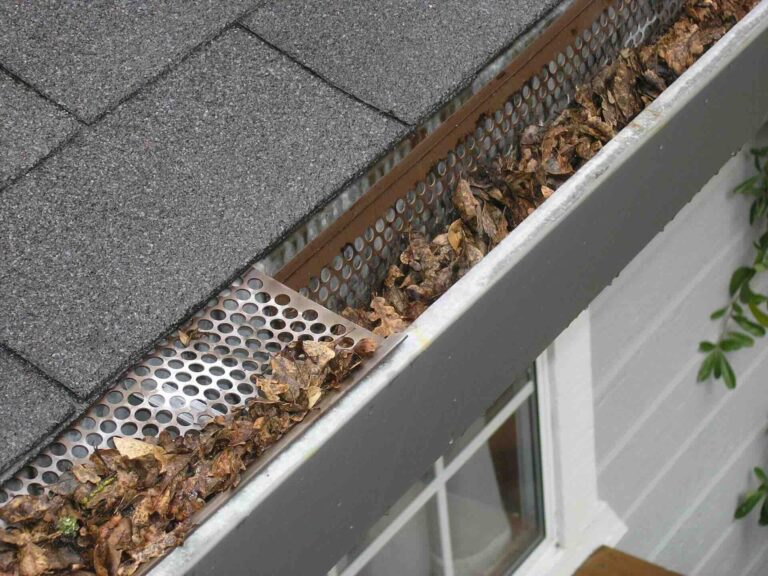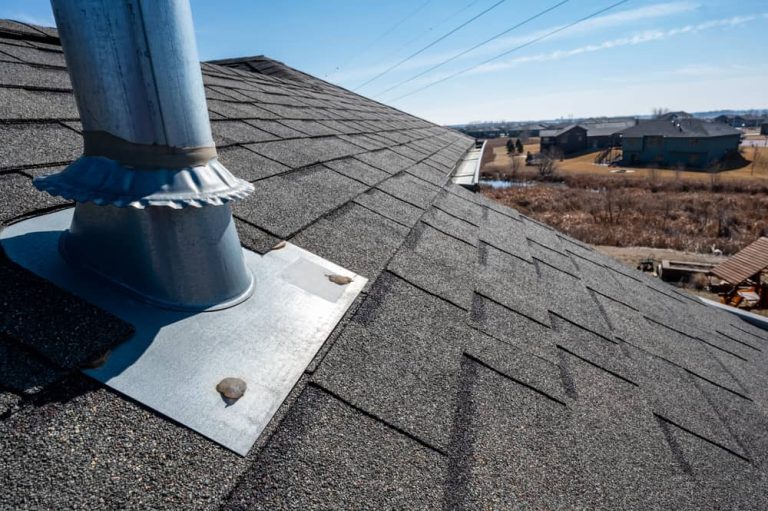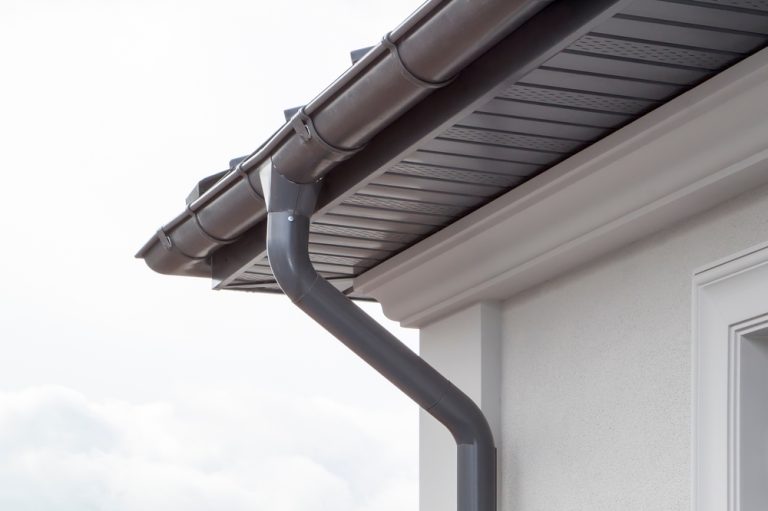











For most homes across Alabama, Georgia, North Carolina, and Tennessee, aluminum gutters deliver the best value at $6-15 per linear foot installed and a 20-30 year lifespan while copper gutters cost $25-50 per linear foot, but can outlast the mortgage at 50-100 years, making them a smart pick for forever homes, historic properties, and high-end builds.
Now the bigger question: which one belongs on your house?
Pick aluminum if you want reliable, attractive, affordable rain protection and you’re staying in your home for a normal stretch of time. On the other hand, pick copper if you own a historic property, a custom build, or a forever home where the upfront premium pays you back in decades of zero-replacement performance and serious curb appeal.
Key Takeaways
Aluminum is the budget-friendly, low-fuss default for the vast majority of Southeast homes
Copper costs about 3-5 times more upfront, but lasts 2-5 times longer
Both materials resist rust, which matters a lot in humid climates like Atlanta and Charlotte in the summer
Copper develops a green-blue patina whereas aluminum can be painted nearly any color you want
The right choice usually comes down to how long you plan to stay as well as your home’s architectural style
Whichever material you pick, sizing (5″ vs 6″) and installation quality matter more than most homeowners realize
Aluminum Gutters, Practical Workhorse
The most common gutter material in the country, aluminum can be seen on nearly every house in Birmingham, Alpharetta, and Raleigh.
Homeowners in the Southeast love aluminum for their gutters because they’re:
- Affordable upfront and over the long haul—Installed pricing typically runs $6 to $15 per linear foot in Southeast neighborhoods, with the spread driven by gauge, profile (K-style vs half-round), and whether you add gutter guards. For a typical 200-foot home, you’re looking at about $1,200 to $3,000, a price point that fits comfortably into most exterior renovation budgets without forcing you to compromise on roof or siding work.
- Rust-proof in humid climates—Aluminum doesn’t rust at all, which is an important advantage when summer humidity in Huntsville or Chattanooga stays in the 80-percent-and-over range for weeks at a stretch. Steel gutters need a galvanized coating that eventually wears off; aluminum simply doesn’t have that failure mode to worry about.
- Lightweight and easy to install—A standard run of seamless aluminum weighs a fraction of what copper or steel would weigh, which means less stress on your fascia boards and lower labor costs at install. Lighter material is also less likely to sag over time, especially when paired with hangers spaced every 24 inches rather than the 36-to-48-inch spacing some installers default to.
- Color flexibility most other materials can’t match—Aluminum comes from the factory in over 25 baked-on enamel colors and accepts paint readily so you can match your trim, your roof, or your front door. If you ever repaint your house, your gutters can change with it; you can’t do that with copper or galvanized steel.
- Seamless fabrication on-site—Most reputable contractors roll-form aluminum gutters in one continuous piece on your driveway, cut to the exact length of each roof run. Fewer seams means fewer leak points, which is the single biggest predictor of how long your gutter system will last.
Where aluminum has limits:
- It dents so a falling oak limb in Knoxville or a ladder leaned the wrong way can leave a permanent dimple that won’t pop back out.
- Thinner gauges (.027″) bend more easily than thicker (.032″) stock. Always ask which gauge you’re being quoted and lean toward the thicker option when trees overhang your roofline.
- Lifespan caps out around 20 to 30 years in our climate, sometimes less if installation cuts corners on hangers, sealants, or downspout sizing.
For most homes valued under $750,000 in areas like Charlotte or Nashville, aluminum offers the strongest cost-to-performance ratio you’ll find.
Copper Gutters, Long-Haul Investment
Copper reigns supreme among residential gutter materials. Walk through the historic neighborhoods of Mountain Brook in Birmingham, Buckhead in Atlanta, or Belle Meade in Nashville, and you’ll spot copper on the homes that have been standing for nearly a century.
Homeowners in the Southeast choose copper for their gutters because they’re:
- Lifespan measured in generations, not decades—Properly installed copper gutters routinely last 50 to 100 years. Soldered copper systems on older Atlanta and Charlotte homes are pushing 80 years and still performing as designed, with no signs of replacement urgency.
- Naturally corrosion-proof—Copper doesn’t rust, doesn’t rot, and has no protective coating that can wear off. The metal itself is the protection, which is why copper plumbing inside walls outlasts the homes it’s installed in.
- Patina that becomes the look—Copper starts a warm penny color, shifts to deep brown over a few years, and eventually develops the famous blue-green verdigris seen on the Statue of Liberty and old church roofs. For many homeowners, this evolution’s the appeal; the gutters become more distinctive over time rather than fading or chipping.
- Algae and moss resistance built into the material—Copper ions wash over the gutter surface every time it rains and naturally inhibit biological growth, a real benefit under the heavy oak and pine canopies common in Southeast yards.
- Strength under load—Copper’s tensile strength is about 40 percent greater than aluminum so it resists denting, handles ice load, and stands up to debris impacts that would dimple aluminum. In hilly East Tennessee neighborhoods around Knoxville where ice storms are an occasional reality, that strength matters.
- Resale value that recovers more of your investment—Real estate data suggests copper gutters recover about 85 to 90 percent of installation cost at resale, compared to 60 to 70 percent for premium aluminum. On a forever home or a high-end property, that gap closes the lifetime cost difference faster than most homeowners expect.
The catch with copper:
- Cost—$25 to $50 per linear foot installed, which is three to four times that of aluminum.
- Specialized labor—Joints are typically soldered, and only copper-compatible fasteners (copper nails, brass hangers, stainless steel screws) can be used. Steel fasteners will corrode the copper from the inside out. The Copper Development Association (CDA)’s “Copper in Architecture” handbook spells out the fastener-compatibility and soldering requirements that any qualified copper gutter installer should already know.
- Theft risk in some areas—Copper has scrap value, and there have been occasional reports of theft from low buildings. Theft of copper is less common at homes, however, than at vacant commercial properties.
- Patina isn’t reversible—If you want shiny copper forever, this material isn’t for you. The chemistry that protects copper is the same chemistry that changes its color.
Side-by-Side Aluminum vs Copper Cost Comparison
Let’s crunch down the numbers for a typical 2,000-square-foot Southeast home needing about 200 linear feet of gutters:
| Factor | Aluminum | Copper |
|---|---|---|
| Cost per linear foot (installed) | $6-15 | $25-50 |
| Total cost (200 LF home) | $1,200-3,000 | $5,000-10,000+ |
| Lifespan | 20-30 years | 50-100 years |
| Cost per year of service | $50-150 | $100-200 |
| Maintenance level | Low | Very low |
| Rust resistance | High | Excellent |
| Dent resistance | Moderate | High |
| Color options | 25+ colors, paintable | Natural patina only |
If you look at the cost-per-year math, you’ll notice that over a long horizon, copper closes the gap with aluminum because you’re not paying for replacement cycles. Over a 15-year horizon, however, aluminum wins on total dollars spent.
Schedule a professional gutter inspection
Lifespan: How Long Gutters Last in Humid Climates
The Southeast is humid, and that matters for gutters. Per the Department of Energy’s Building Science Education guidance, gutter materials must channel several thousand gallons of roof runoff away from the foundation during a single inch of rain. Humidity accelerates the breakdown of poorly-coated metals.
Here’s what each material typically delivers in our region:
- Aluminum: 20 to 30 years with regular cleaning. The lifespan shrinks closer to 20 years if installation cuts corners on hangers or sealants.
- Copper: Over 50 years. In fact, many soldered copper systems on homes in older Atlanta and Charlotte neighborhoods are pushing 80 and even 100 years.
Two factors that shorten the lifespan of both materials is incorrect slope and undersized downspouts. The Southeast gets intense bursts of rain. Atlanta and Nashville, for instance, regularly see over 50 inches of annual precipitation.
The National Oceanic and Atmospheric Administration (NOAA)’s precipitation frequency data shows that our region experiences some of the most intense short-duration rainfall events in the country. Your gutters need to move that volume fast.
Southeast Weather: How Each Material Performs
Our climate puts five specific stressors on a gutter system, and aluminum and copper handle each one a little differently.
- Heavy summer downpours—Both materials handle volume fine if sized correctly. For homes with steep roofs in Chattanooga or large-footprint roofs in Alpharetta, 6-inch gutters with 3″x4″ downspouts are usually smarter than the standard 5-inch profile.
- Pollen and tree debris—Spring pine pollen across the region, which is legendary in Atlanta, and fall leaf drop in Knoxville and Asheville foothills mean that both materials need cleaning. Copper’s antimicrobial property gives it a slight edge against algae buildup.
- Humidity—Aluminum’s modern paint coatings handle humidity well. Copper doesn’t care about humidity at all; it just patinas faster in moist air.
- Occasional ice events—Nashville, Knoxville, and the higher elevations around Chattanooga see ice storms. Copper’s stronger tensile strength resists deformation under ice load better than thin-gauge aluminum.
- Hail—Aluminum dents from hail; copper is more resistant. Take this into consideration if your zip code sees frequent hail.
Schedule a professional gutter inspection
Curb Appeal and Resale Value
Personal taste varies, but a few patterns hold up reliably across our region.
- Modern builds in Alpharetta or Charlotte: aluminum in a coordinated trim color usually looks cleaner and more intentional than copper
- Historic homes in Birmingham, Nashville, or Raleigh: copper half-round gutters look at home and often add measurable resale value
- Stone, brick, or cedar exteriors: copper complements naturally, especially as it weathers
- Vinyl siding or contemporary paint schemes: painted aluminum almost always wins
If your home has architectural character such as Tudor, Craftsman, Colonial, or French Country, copper tends to elevate it. On the other hand, if your home’s a clean-lined contemporary or a builder-grade suburban, color-matched aluminum blends into the trim line so the eye stays on the home’s architecture, landscaping, and front entry instead of getting pulled up to the gutters.
Maintenance Requirements
For both aluminum and copper, extend downspouts at least 5 feet from the foundation (10+ feet to a catchment system if connected). The EPA’s stormwater management guidance calls this out as critical for foundation protection. Remember that a great gutter material on a poorly-routed downspout is just wasted money.
Both materials are low-maintenance, but their cleaning routines differ slightly.
Aluminum Gutter Cleaning
Clean twice yearly, in spring and fall. This semiannual cleaning schedule is what keeps gutters performing as intended and prevents the overflow that damages foundations, according to the University of Nebraska Extension’s stormwater management guide.
Inspect seals at corners and end caps every few years. Repaint if you want to update the color.
Copper Gutter Cleaning
Clean twice yearly, but no painting or resealing. Soldered joints essentially never fail.
If you want to slow the patina process, periodic cleaning with a mild acid can keep copper brighter, but most owners just let it age.
Which Type of Gutter Fits Your Home Checklist
Ask yourself the following four questions in order to figure out the right material for your gutters.
- How long will you own this home?
- Less than 15 years → aluminum
- 15+ years or “forever home” → consider copper
- 2. What’s the home’s architectural style?
- Modern, contemporary, builder-grade → aluminum
- Historic, custom, high-end traditional → copper
- 3. What’s your budget for the gutter project?
- Under $4,000 → aluminum
- $5,000-15,000+ available → copper’s on the table
- 4. What’s the home worth?
- Under $750K → aluminum almost always wins on return on investment (ROI)
- Over $750K → copper’s resale lift starts making the math work
If three of the four answers point to one of the two materials, you have your answer.
How to Choose the Right Contractor for Your Gutters
The single biggest determinant of whether your gutters last 30 years or just 10 is the installer rather than the material. A premium copper system installed poorly will fail before a budget aluminum system that was installed properly.
Before signing anything, be sure to verify the following five things:
- Licensing and liability insurance—Confirm that the contractor holds the proper state license for exterior work in your state. Alabama, Georgia, North Carolina, and Tennessee each has different licensing thresholds.
Also, ask to see a current certificate of general liability insurance. A contractor who hesitates when you ask about licensing and liability insurance is the wrong contractor. - Material-specific experience—Aluminum installation is straightforward; copper isn’t. Copper requires soldered joints, copper-compatible fasteners, and an understanding of expansion and contraction that takes years to develop. If you’re choosing copper, ask for photos of completed copper jobs and references from customers whose installations are at least five years old.
The Copper Development Association’s “Copper in Architecture” handbook is the industry reference for proper copper installation methods, and a qualified copper installer will be familiar with it. - Proper sizing methodology—Ask the contractor how they size gutters and downspouts for your specific roof. A correct answer mentions roof area, rainfall intensity, and downspout count, not just “We use 5-inch on everything.”
SMACNA’s Architectural Sheet Metal Manual is the industry-standard methodology and uses NOAA rainfall data tied to your specific city. A contractor who can’t speak to sizing logic at all is one to avoid. - Seamless fabrication on-site—For aluminum, confirm that the contractor roll-forms gutters on a truck-mounted machine in your driveway rather than installing precut sectional pieces from a big-box store. Seamless runs dramatically reduce leak points over the life of the system.
- Written warranty in plain language—A reputable contractor will offer a workmanship warranty (typically five to 10 years), separate from the manufacturer’s material warranty. Read both warranties before signing, and be skeptical of “lifetime” warranties without a clear definition of what’s covered.
Keep in mind that the best time to hire a gutter contractor is when they’re already on your property for related work. If you’re getting a roof replacement, siding upgrade, or window installation, bundling gutters into the project usually means better pricing, fewer scheduling headaches, and a single point of accountability if anything goes sideways.
Reference Sources
- Alabama Licensing Board for General Contractors: License Roster Search
- Copper Development Association Inc. (CDA): Design Handbook
- Georgia Professional Licensing Boards Division: Professional Licensee Search
- National Oceanic and Atmospheric Administration (NOAA): NOAA Atlas 14 Point Precipitation Frequency Estimates: AL
- National Oceanic and Atmospheric Administration (NOAA): NOAA Atlas 14 Point Precipitation Frequency Estimates: GA
- National Oceanic and Atmospheric Administration (NOAA): NOAA Atlas 14 Point Precipitation Frequency Estimates: NC
- National Oceanic and Atmospheric Administration (NOAA): NOAA Atlas 14 Point Precipitation Frequency Estimates: TN
- North Carolina Licensing Board for General Contractors: Verify License/Qualifier Search
- Sheet Metal and Air Conditioning Contractors’ National Association (SMACNA): Downspout & Gutter Sizing Calculator
- State of Alabama Home Builders Licensure Board: How to Protect Yourself from Fraudulent and Unlicensed Builders
- Tennessee Department of Commerce & Insurance: Licensing & Regulations
- University of Nebraska Extension: G2186: Stormwater Management: Disconnecting Downspouts and Impervious Surfaces
- U.S. Department of Energy (DOE): Building Science Education: Foundation Drain Gutters Downspouts
Frequently Asked Questions (FAQ) about Aluminum vs Copper Gutters
Below are the questions Southeast homeowners ask most often once they’ve narrowed the choice down to these two materials for their gutters.
Are copper gutters worth it?
Yes for homes in the right architectural style, owned long-term, in higher value brackets. For most other situations, premium aluminum delivers 80% of the performance at 25% of the price.
Will copper gutters turn green in the Southeast humidity?
Yes, faster than in drier climates. Expect noticeable patina within 5-10 years and full blue-green within 15-20 years.
Can I mix copper and aluminum on the same house?
Usually not recommended. The metals can react where they meet, and it looks unintentional from an aesthetic point of view. It’s best if you pick one and commit to it.
How much more expensive are copper gutters than aluminum?
About 3-5 times more, depending on style and labor market. A typical Southeast home could run $1,500 in aluminum or $7,500 in copper.
Do I need 5-inch or 6-inch gutters in the Southeast?
For most single-story homes, 5-inch handles the volume. For two-story homes, large rooflines, or steep pitches common in hilly Knoxville and Chattanooga neighborhoods, 6-inch is the smarter spec.
What about half-round vs K-style?
Half-round looks better with copper and on historic homes. K-style is the standard aluminum profile and handles slightly more water volume per inch of width.
Choosing the Right Gutters for Your Southeast Home
Aluminum and copper both protect your home; they just protect it on different timelines and at different price points.
Aluminum is the smart, dependable choice for most Southeast homeowners: affordable, attractive, and built to handle our humidity and rainfall for two to three decades. Copper is the long-game choice for homeowners with the right architectural style, the right budget, and the intention to stay put, a system that ages into something more beautiful while protecting the home for generations.
Whichever direction you lean in, the difference between a gutter system that performs and one that fails early almost always comes down to three details: correct sizing for your roof area, proper slope, and downspouts that actually carry water away from your foundation. Material matters, but quality of installation matters even more.
Pinnacle Home Improvements is proud to maintain an A+ rating with the Better Business Bureau (BBB). We’ve been voted “Best Exterior Remodeler in 2026.”
If you’re already thinking about a roof replacement, new siding, or window upgrade, that’s the ideal moment to add new gutters, the crew’s already on-site, the fascia’s accessible, and bundling the projects keeps total costs lower.
Request an appointment for a professional gutter inspection, and our team will walk you through aluminum and copper options side by side, measure your roof, and give you fair pricing on the system that makes sense for your home. No pressure, no surprises, just clear answers.