










Most asphalt shingle roofs in North Carolina need replacing between 15 and 25 years, but knowing when to replace yours comes down to two things: warning signs your roof’s showing and picking the right season, ideally spring or fall, to schedule the work.
Your roof works harder in North Carolina than almost anywhere else. It absorbs Charlotte’s relentless summer ultraviolet (UV) radiation, takes hits from Raleigh’s hailstorms, and braces against tropical-storm remnants that push inland every hurricane season. We see these conditions play out across our entire North Carolina service area, from the Piedmont to the coast. But that heavy workload shortens its life.
A failing roof, however, gives you plenty of warning. If you learn to read those signs and understand which season makes the most sense for the project, you’ll be able to plan a replacement on your own terms instead of scrambling after a leak soaks your ceiling.
Key Takeaways
Asphalt shingle roofs typically last 15-25 years in North Carolina, which is shorter than the national average due to heat, humidity, and storms.
Condition matters more than age; a 12-year-old roof battered by hail may need replacing before a well-maintained 20-year-old one.
The clearest warning signs are widespread granule loss, curling or missing shingles, interior water stains, sagging, and daylight visible through the attic.
Repair makes sense for isolated, localized damage. On the other hand, replacement’s indicated when problems span multiple slopes or the roof’s near the end of its lifespan.
Spring and fall are the best seasons to replace a roof in North Carolina, especially fall since October’s historically our state’s driest month, with cool installation weather.
Professional inspection’s the deciding factor; many roof problems are invisible from the ground so book an inspection every few years and after every major storm.
How Long Does a Roof Last in North Carolina?
Every roofing material has an average expected lifespan, but actual performance depends on installation quality, ventilation, and local conditions.
North Carolina homeowners can realistically expect:
- 3-tab asphalt shingles: 15-20 years; most affordable option, but the first to struggle with North Carolina’s UV and humidity
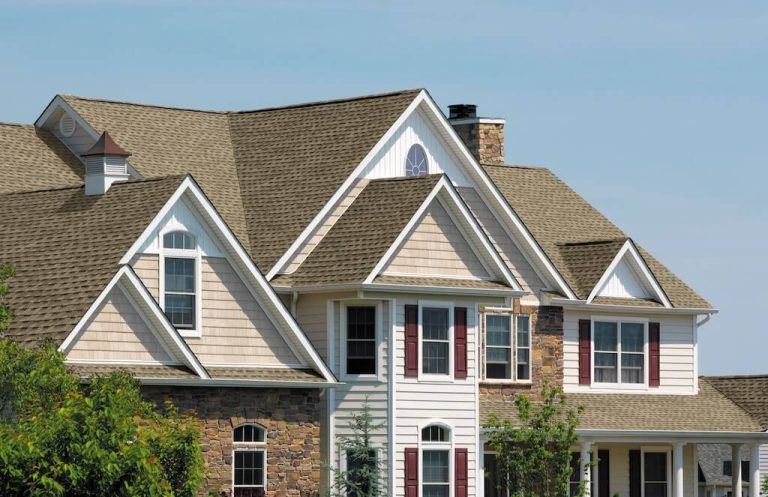
- Architectural (dimensional) asphalt shingles: 25-30 years; most popular choice statewide, balancing cost and durability with wind ratings up to approximately 130 mph
- Metal roofing: 40-70 years; sheds water fast, resists hail better, and reflects heat instead of absorbing it
- Wood shakes: 20-40 years though humidity and moisture in North Carolina tend to push them toward the lower end
- Tile and slate: 50-plus years, but the structural weight isn’t right for every home.
Keep in mind that these are averages. A roof that would normally reach 30 years in a dry climate could fail a decade early in North Carolina if it’s poorly ventilated or not maintained. Installation quality alone can swing roof life by 30 to 50 percent.
Why North Carolina’s Climate Wears Roofs Out Faster
North Carolina sits in a humid subtropical zone, and that climate stacks several stressors on top of one another:
- Intense summer UV and heat—In Charlotte and Raleigh, prolonged sun dries out asphalt shingles, making them brittle and prone to cracking. Darker roofs absorb even more heat and age faster.
- High humidity—Persistent moisture breeds algae, moss, and mold. Beyond the ugly black streaks, that moisture can weaken underlayment and rot roof decking from below.
- Thunderstorms and hail—The Piedmont: Charlotte, Raleigh, and Greensboro experiences recurring hailstorms that bruise shingles and dent flashing. A single severe storm can end a roof’s life years early.
- Tropical storms and high winds—Even well inland, the remnants of coastal hurricanes deliver winds that lift and tear shingles.
- Thermal cycling—Repeated expansion in summer heat and contraction on cold nights weakens seals and slowly works fasteners loose.
- Tree debris and pollen—Mature canopies common in older North Carolina neighborhoods drop leaves and our state’s famously heavy pollen, which traps moisture against the roof surface. Pairing a new roof with gutter protection keeps pollen and leaf debris from backing up against your new shingles.
Don’t assume that your roof will hit the top of its rated lifespan. In North Carolina, plan closer to the lower end and let the condition of your roof rather than the calendar drive your decision.
Warning Signs that It’s Time to Replace Your Roof
Your roof won’t announce its retirement. Instead, it will show a pattern of smaller signals. If there’s just one isolated issue, it often means a repair. However, several signs together, especially across multiple slopes, point toward replacement.
Exterior Warning Signs to Look For
Walk across the street and study your roof from a few different angles. Watch for the following signs:
- Curling, cupping, or buckling shingles—Edges that lift or tabs that cup signal shingles near the end of their service life are often one storm away from blowing off.
- Missing shingles—A few gaps near the edges may be a simple fix whereas widespread loss across the roof is a different story.
- Cracked or bald shingles—Bare patches mean that the protective granules, your shingles’ UV shield, have worn away.
- Granules in the gutters—A little granule loss is normal on a newer roof. If you have to sweep out gutterfuls of grit on an older roof, however, means that it’s wearing out. Heavy, sudden loss can also indicate hail damage worth an insurance claim. Act right away if a storm blows shingles off your roof.
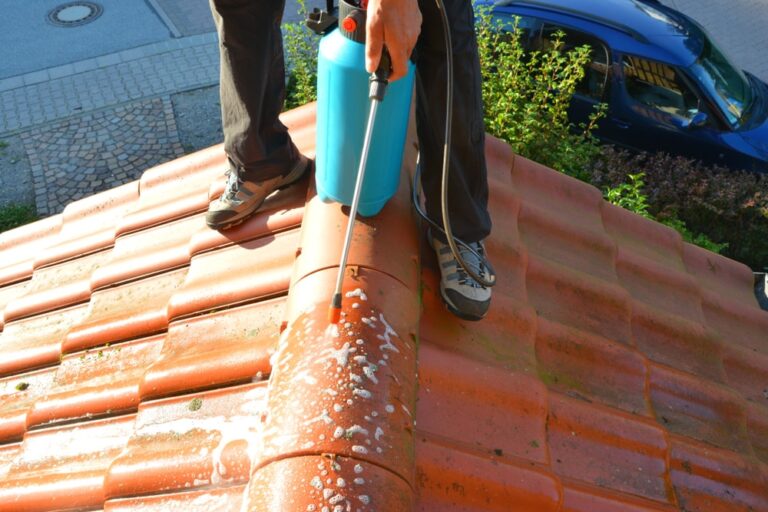
- Dark streaks or moss—Common in humid North Carolina, algae streaks are mostly cosmetic, but moss holds moisture against the roof and can shorten its life.
- Damaged or rusted flashing—The metal around chimneys and vents is a frequent leak point when it corrodes or pulls loose.
- Sagging or wavy roofline—Often the most serious sign, it’s visible when you study the roof from across the street and can point to rotted decking or weakened structural support, requiring attention right away.
Interior Warning Signs to Look For
Some of the most telling clues are inside your home rather than on the roof:
- Water stains on ceilings or walls—Brown, yellow, or gray marks signal an active leak.
- Daylight through attic boards—Large beams of light means that there’s a gap in the decking, and water and air are getting in.
- Persistent musty smell—This could indicate damp insulation, pointing to trapped moisture and possible mildew.
- Climbing energy bills—lf there’s no other explanation, it may be a clue that the roofing system’s no longer efficiently protecting your attic.
If you spot one or more of these signs, don’t panic. Your next move should be to schedule a professional roof inspection.
What About Roof Age: 15-to-20-Year Question
Age’s the warning sign homeowners ask about most. A useful rule of thumb: once an asphalt shingle roof passes 15 years, start assessing it seriously. By 20 years you should be actively planning its replacement.
Two age-related details matter most in North Carolina:
- Layering—If a previous roof was installed over an older layer of shingles rather than torn off, and that system’s over 20 years old, replacement’s probably your path.
- Documentation—If you don’t know your roof’s age, check your home purchase closing paperwork or home improvement records or ask a roofer to estimate it from wear patterns.
Age, however, doesn’t replace condition. A 20-year-old roof that was well installed, properly ventilated, and spared by the weather may still have life left. On the other hand, a 12-year-old roof hammered by Piedmont hail may be done.
Replacing a roof a few years before total failure’s often the smart financial move. It heads off expensive damage to decking, insulation, and drywall underneath.
Repair or Replace: How to Decide
Not every problem calls for a full replacement. These rules of thumb will point you in the right direction:
- Lean toward repair: if damage’s isolated and localized such as a few missing shingles, a single flashing leak, or a cracked pipe boot, and the roof’s otherwise midlife. (For a closer look at what that kind of fix involves, see our guide on how to repair a roof.)
- Lean toward replacement: if damage spans multiple slopes, leaks recur in different spots, the decking’s compromised, or the roof’s near the end of its expected lifespan.
A repair on a roof that’s already 18 years old often just delays the inevitable while you keep paying for patches. Weigh the immediate cost of repairs against the longer-term value of a new roof with a fresh warranty. A trustworthy contractor will walk you through that math honestly rather than pushing the bigger ticket.
Best Season to Replace Your Roof in North Carolina
For many North Carolina homeowners, “when to replace a roof” isn’t only about whether to do it; it’s also about which month to book it. Timing affects installation quality, scheduling, and price.
Here’s how the seasons stack up.
Spring: March to May
One of the most popular times for North Carolina roof replacements, spring’s milder temperatures and longer days make installation faster and more comfortable for crews. Moderate warmth also helps asphalt shingles to seal properly, which is critical for long-term performance.
Spring rain, however, may be a stumbling block. Stretches of wet weather can push a project back a day or two so keep an eye on the forecast as your start date approaches.
Summer: June to August
The summer season could be a good time for roof replacement, but there are trade-offs. Roofs become punishingly hot for crews, which can slow the pace of work.
Frequent afternoon thunderstorms add scheduling risk. The upside’s long daylight hours and the chance to lock in a new roof before peak hurricane season.
Fall: September to November
Many North Carolina roofing professionals consider fall to be the single best season for a replacement. Temperatures are still warm enough to work most of the day, but rarely cold enough to interfere with shingle sealing.
October’s historically North Carolina’s driest month, which means fewer weather delays and close to optimal installation conditions. Fall also gets your home buttoned up before winter.
Winter: December to February
Roof replacements are still possible in winter, and crews handle them year-round, but it’s the slowest option. Cold temperatures slow the shingle-sealing process, and shorter daylight hours stretch timelines.
Winter storms tend to expose or worsen damage so it usually makes sense for urgent situations rather than for planned projects.
In general, if your inspection shows that you have a season or two of life left, aim for spring or fall, especially fall. You’ll get better installation conditions and often better contractor availability than the poststorm rush.
Choosing a Roofing Contractor in Charlotte or Raleigh
The contractor you hire matters as much as the shingles you choose. Poor installation’s a leading cause of premature roof failure in North Carolina. If you’re local to the Queen City, see how we approach roof replacement in Charlotte. Raleigh homeowners can get the same evaluation through our Raleigh roofing services page.
Protect yourself by:
- Confirming licensing and insurance—Verify general liability and workers’ compensation coverage before anyone climbs your roof.
- Being wary of storm-chasers—After major hail or wind events, out-of-town crews flood North Carolina neighborhoods with pressure tactics and promises that vanish with your deposit.
- Ask about ventilation—A quality North Carolina roofer evaluates attic intake and exhaust as part of the job, not an afterthought. Proper ventilation’s one of the biggest factors in roof longevity here.
- Get multiple written estimates—Make sure that they itemize tear-off, underlayment, decking repair, and cleanup.
- Check manufacturer certifications—Credentials from brands like Owens Corning or CertainTeed often unlock stronger warranty coverage.
- Local reviews—Look for recent reviews close to your North Carolina location.
Cost
Roof replacement cost depends on your home’s size, roof pitch, material choice, and the extent of any decking repairs once the old roof comes off. Rather than fixating on a single number, get a few itemized local estimates so that you can compare apples to apples.
If storm damage’s involved, your homeowners insurance may cover part or all of the replacement. Carefully document the damage with photos and report it promptly. Browse our North Carolina roof replacement services to see materials and warranty options before requesting a quote.
If you’re ready to consider replacing your roof, request a free in-home consultation.
Reference Sources:
- ENERGY STAR®: Cool Roofs
- National Oceanic and Atmospheric Administration (NOAA): National Centers for Environmental Information (NCEI): Storm Events Database: North Carolina
- National Roofing Contractors Association (NRCA): Roofing Guidelines
- North Carolina Licensing Board for General Contractors: Verify License/Qualifier Search
- U.S. Environmental Protection Agency (EPA): Heat Island Effect
Frequently Asked Questions (FAQ) about When to Replace a Roof in North Carolina
Take a look at our answers to the questions North Carolina homeowners ask most often about roof replacement timing.
How often should a roof be replaced in North Carolina?
Most asphalt shingle roofs need replacement every 15-25 years in North Carolina. Architectural shingles last toward the upper end of that range while older 3-tab shingles and storm-battered roofs trend lower. Metal roofs can last 40-70 years.
What’s the best month to replace a roof in North Carolina?
October’s widely considered the best month for roof replacement in our state. It’s historically North Carolina’s driest month, and cool fall temperatures create close to ideal conditions for shingles to seal properly. More broadly, spring and fall both offer favorable installation weather.
Can I just repair my roof instead of replacing it?
Often, yes as long as the damage’s isolated like a few missing shingles or a single flashing leak, and the roof’s otherwise midlife. Replacement makes more sense when damage spans multiple areas or the roof’s near the end of its lifespan.
Does North Carolina’s humidity really shorten roof life?
It does. Persistent moisture promotes algae, moss, and mold growth, and it can weaken underlayment and decking from underneath. Algae-resistant shingles and good attic ventilation help to counteract it.
What’s the most reliable sign I need a new roof?
A sagging or wavy roofline’s the most serious single sign and warrants immediate attention. Widespread granule loss, curling shingles across multiple slopes, and recurring interior leaks are also strong indicators.
Will my insurance cover roof replacement?
It may, especially when storm, hail, or wind damage is the cause. Document everything with photos, report the damage promptly, and ask your roofing contractor whether they can identify storm damage during the inspection.
Don’t Wait for the Leak to Happen
Your roof is your home’s first line of defense, and in North Carolina’s demanding climate, waiting until water is dripping through the ceiling is the most expensive way to learn it has failed. Reading the warning signs early and pairing what you see with a professional inspection puts you in control of the timing, the budget, and the choice of contractor.
If your North Carolina home’s roof is approaching 15 years, showing any of the signs above, or has weathered a recent storm, schedule a professional roof inspection now. A qualified local roofer can tell you exactly where your roof stands and help you plan ahead, long before a small problem becomes a costly one.
Pinnacle Home Improvements is proud to maintain an A+ rating with the Better Business Bureau (BBB). We’ve also been recognized with awards as best roofing contractor of 2026 as well as “best exterior remodeler in 2026.”
Request an appointment today, and we’ll come to your home to look at your roof, assess its condition, explain your repair-vs.-replacement options, and give you a clear written estimate with no obligation to move forward.