









From Birmingham to Asheville, entry door trends in the Southeast are redefining curb appeal in 2026, and homeowners in Alabama, Georgia, North Carolina, and Tennessee are embracing bolder styles, smarter materials, and more climate-conscious choices than ever before.
Key Takeaways
Fiberglass dominance—Fiberglass is the leading material choice because it resists warping and rotting in high humidity while offering up to four times the insulating value of traditional wood.
Energy efficiency priority—Homeowners are increasingly selecting ENERGY STAR-certified doors with polyurethane foam cores to combat rising cooling costs during long Southern summers.
Increased door heights—A major architectural shift involves upgrading from standard 6-foot-8-inch doors to 8-foot or 9-foot entries to create a more grand and modern “sense of arrival.”
Natural wood-grain finishes—High-definition fiberglass embossing that mimics mahogany or oak is now requested by 75% of homeowners who want organic beauty without the maintenance of real wood.
Regional color palette—Bold colors like forest green, navy blue, and matte black are replacing neutrals to better complement the red brick and stone exteriors common in Georgia and Alabama.
Craftsman and modern farmhouse styles—These two design styles remain the most popular choices because they harmonize perfectly with the existing architectural vernacular of Southeast neighborhoods.
Smart technology integration—Features such as smart locks, video doorbells, and multipoint locking systems have moved from luxury upgrades to baseline expectations for new installations.
Strategic use of glass—Sidelights, transoms, and textured privacy glass are being used thoughtfully to maximize natural light while maintaining energy performance and home security.
High ROI—Entry door replacements offer exceptional financial value, with steel door upgrades in the South Atlantic region returning over 200% of their cost at resale.
Federal tax incentives—Homeowners can take advantage of the Inflation Reduction Act to claim a 30% tax credit, up to $250, for qualifying energy-efficient door upgrades.
If your front door has seen better days, this is the year to do something about it. Your entry door does more than keep the weather out. It sets the tone for your entire home, signals your style to the neighborhood, and affects your energy bills every single month. In the Southeast, where summers are punishing and humidity never really goes away, that last part matters more than most homeowners realize.
Why the Front Door Is Having a Moment Right Now
A shift is happening across residential neighborhoods in the South. After years of builder-grade beige and plain white entries, homeowners are treating the front door as a design statement, a focal point that anchors the entire exterior.
With higher energy costs and a strong national focus on home value, the front door has become one of the smartest home improvement investments you can make. According to Zonda’s 2025 Cost vs. Value (CVV) Report, a steel entry door replacement returns over 200% of its cost at resale in the South Atlantic region, which includes Georgia and North Carolina.
For a renovation that costs roughly $2,000 to $5,000+ for a quality installation, that’s an extraordinary return.
Southeast Differs from the Rest of the Country
Before getting into specific trends, we want to point out that the Southeast has its own climate demands, architectural vernacular, and lifestyle expectations. Flipping through magazines for ideas isn’t enough; what works for a home in Minnesota or Oregon won’t automatically work for a home in Birmingham, Atlanta, Asheville, or Nashville.
When evaluating entry door ideas, you need to filter them through a regional lens. Here’s what makes the Southeast unique when it comes to doors.
- Relentless heat and humidity—Alabama, Georgia, and coastal North Carolina regularly see summer heat indexes above 100°F. Humidity causes wood to swell, warp, and rot over time, sometimes faster than homeowners expect.
- Specific architectural styles—Craftsman bungalows, traditional Southern colonials, modern farmhouses, and transitional new builds each dominate different parts of our region. Door styles that look right in one context can look completely wrong in another.
- Curb appeal carries weight—In growing metro areas like Atlanta, Charlotte, Nashville, and Huntsville, neighborhoods are competitive. A refreshed entry can meaningfully separate your home from comparable listings.
- Storm exposure—Coastal Alabama, the mountains of western North Carolina, and Middle Tennessee all face seasonal weather events that put real stress on exterior doors.
2026 Entry Door Trends for Southeast Homes
The eight trends below reflect what homeowners across Alabama, Georgia, North Carolina, and Tennessee are actually choosing and why each one makes sense for the region’s climate, architecture, and lifestyle.
1. Fiberglass Is the Dominant Material for Good Reason
If there’s one material upgrade that defines 2026 for Southeast homeowners, it’s fiberglass.
Wood doors have always been beautiful, but in a climate defined by humidity, heat cycles, and afternoon thunderstorms, they require ongoing maintenance that many homeowners simply don’t want to commit to. Steel doors offer excellent security and return on investment (ROI), but fiberglass has emerged as the regional sweet spot as it combines the aesthetic warmth of wood grain with the climate performance of engineered materials.
Fiberglass is right for Alabama, Georgia, North Carolina, and Tennessee homes because:
- Fiberglass doesn’t absorb moisture so it won’t swell, warp, or stick in humid conditions
- A high-quality fiberglass door with a polyurethane foam core delivers up to four times the insulating value of a solid wood door of the same thickness
- R-values on premium fiberglass doors can reach R-9, compared to R-1 to R-2 for a typical solid wood door
- Modern fiberglass doors can be stained or painted to mimic mahogany, oak, or knotty alder so you don’t sacrifice the look you want
- It doesn’t require a repainting schedule or seasonal resealing
If your current door is a wood door showing signs of age, swelling, or rot around the frame edges, a fiberglass replacement is the most climate-intelligent upgrade you can make in the Southeast.
2. Tall Doors Are Making a Big Statement
One of the national 2026 entry door trends that translates well to Southeast architecture is the move toward taller door heights.
Standard residential doors are typically 6 feet 8 inches tall. In 2026, more and more homeowners are upgrading to 8-foot or even 9-foot entry doors, and the visual impact is immediate. A taller door creates a sense of arrival that a standard door simply can’t achieve.
This trend works especially well for:
- Traditional Southern colonials with tall front facades and covered porticos
- Modern farmhouse builds that are already designed with generous proportions
- New construction in growing Tennessee and Georgia suburbs where builders are using taller ceiling heights throughout
Industry data supports this shift: 60% of window and door professionals surveyed by Fixr identified tall front doors as the single biggest entry door trend for 2026.
If your home has a covered porch entry, common throughout the Southeast, a taller door framed by sidelights or a transom window becomes an architectural anchor that enhances the entire front elevation.
3. Wood-Grain Finishes Are the Most-Requested Look
While painted doors have had a long run, the data points toward a return to organic, natural-looking finishes. According to a survey of window and door industry professionals, wood-grain finish is the most-requested front door aesthetic heading into 2026, cited by 75% of respondents.
For Southeast homeowners, this trend definitely resonates. The region’s dominant architectural styles such as Craftsman, Colonial Revival, and traditional farmhouse were designed with natural materials at their core. A rich mahogany-stained fiberglass door or a warm knotty alder look fits naturally into these contexts.
A few things worth knowing about this trend:
- You don’t need a real wood door to achieve this look. Modern fiberglass doors with high-definition embossing are nearly indistinguishable from real stained wood at normal viewing distance.
- Deep stain tones like dark walnut, aged mahogany, and weathered chestnut pair well with the brick exteriors common throughout Alabama and Georgia neighborhoods.
- Lighter natural tones work well with the cedar shake, board-and-batten, and light-painted siding common in the mountain communities of western North Carolina and East Tennessee.
The wood-grain trend also aligns with the broader 2026 design movement toward biophilic design, the principle that connecting a home visually to natural materials creates a warmer, more grounded feeling.
4. Color Is Back, and the Southeast Palette Is Specific
The era of the neutral door is fading. In 2026, homeowners across the country are treating the front door as a color moment, a single bold accent against a more neutral exterior.
In the Southeast, the colors that resonate most strongly are:
- Forest green and sage green—These earthy tones look natural and grounded against the red brick and stone exteriors common in Alabama and Georgia. A deep hunter green door on a red-brick colonial is a combination that has serious staying power.
- Deep navy blue—Navy leads national 2026 color surveys at 25% preference. It pairs well with white trim, white siding, and gray stone, all common in newer North Carolina and Tennessee builds.
- Warm black—Matte black has been building momentum for several years, and it shows no sign of slowing. It works universally with brick, fiber cement, painted wood, and stone exteriors alike, and it photographs exceptionally well for real estate listings.
- Rich moody teal—Emerging as a regional favorite in more design-forward areas like Nashville, Atlanta, and Asheville, teal bridges the line between blue and green in a way that feels fresh without being jarring.
Practical tip: darker door colors fade faster on south- and west-facing entries where direct afternoon sun is intense. In the Southeast, where exposure to ultraviolet (UV) radiation is high year-round, look for doors with factory-applied, UV-resistant finishes rather than field-painted surfaces. The finish quality will hold significantly longer.
5. Craftsman and Modern Farmhouse Styles Lead the Southeast
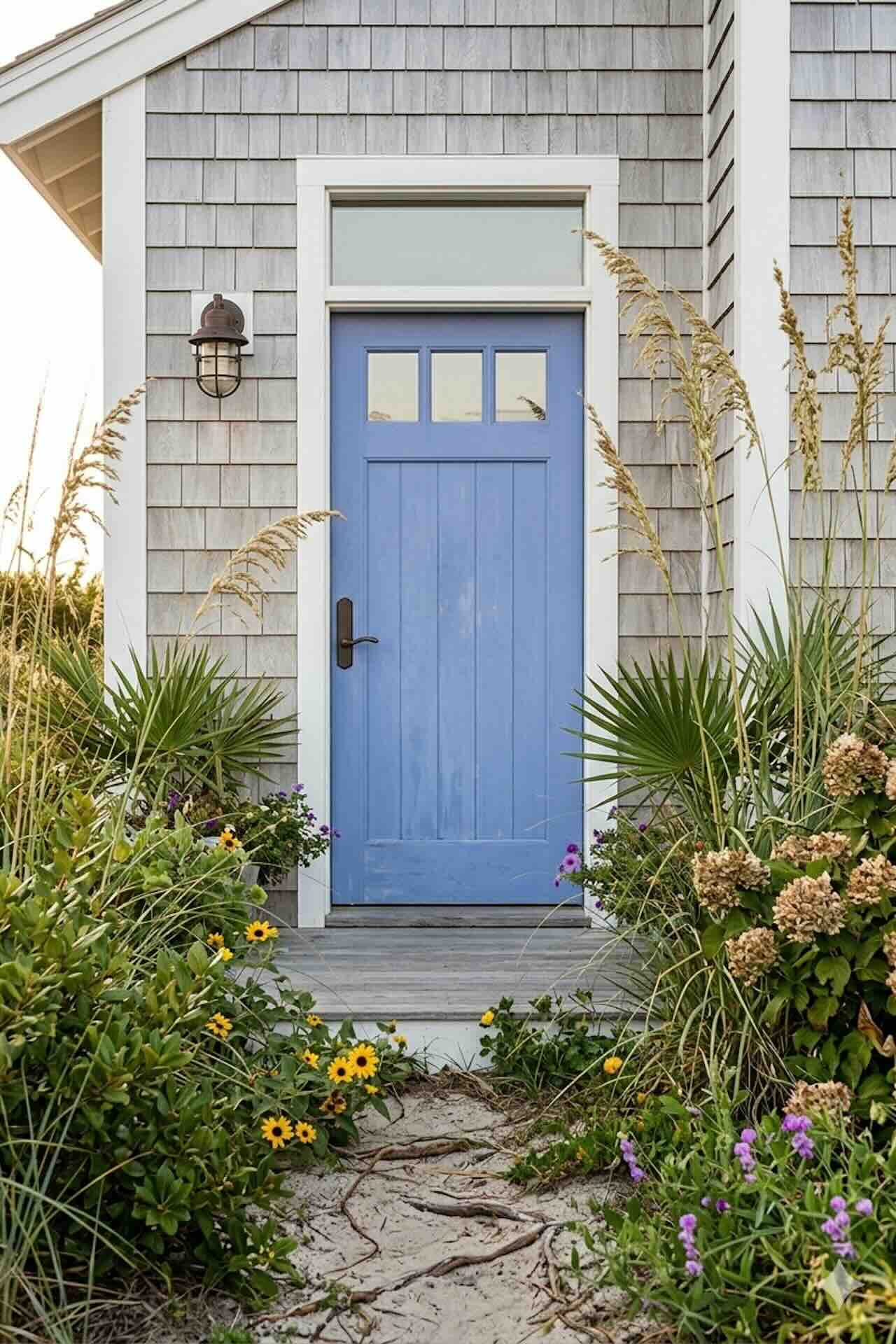
When it comes to the door’s physical form and panel design, a couple of styles dominate 2026 for Southeast homes: Craftsman and modern farmhouse.
Craftsman-style doors are defined by:
- Horizontal or vertical panel arrangements with clean, squared-off profiles
- Glass panes concentrated in the upper third of the door, typically a row of small divided lites, individual glass panes separated by thin bars called muntins, or a three-lite arrangement
- Sturdy proportions that communicate solidity without ornamentation
- A natural fit with bungalows, foursquares, and transitional builds that dominate older Southern neighborhoods
Modern farmhouse doors are defined by:
- Simple vertical panel arrangements, often just two or four large flat panels
- Oversized glass panes, either clear or lightly textured, to invite natural light into the entry
- Dark, unpolished hardware in oil-rubbed bronze or matte black
- Strong visual contrast between the door color and the trim color
Craftsman and modern farmhouse styles work across the full price range, from entry-level steel doors to premium fiberglass units. Both translate naturally to the region’s architectural fabric, which is why they consistently outperform more contemporary styles like pivot doors or ultra-minimalist flush panels in the Southeast market.
If your home is a traditional Colonial, a Craftsman bungalow, or a transitional build in a neighborhood of mixed styles, either of these directions will feel architecturally coherent.
6. Glass Is Growing Thoughtfully
The use of glass in entry doors is expanding in 2026, driven by a desire for more natural light in entry spaces and a design preference for openness.
Before committing to a glass-heavy design, Southeast homeowners should weigh street-facing privacy on smaller lots, intense afternoon sun on south- and west-facing entries, and the added heat gain that large, clear glass panels can introduce in a climate where cooling costs are already significant.
Glass options worth considering:
- Sidelights—Narrow vertical glass panels flanking the door add light and architectural formality without significantly compromising privacy. This is the most popular glass addition in the Southeast and works well with both Craftsman and Colonial styles.
- Transoms—A horizontal window above the door adds height and light. When paired with a tall door, a transom creates a grand entry that’s a genuine architectural upgrade.
- Privacy glass—Rain glass, frosted glass, and textured glass options allow light transmission while obscuring visibility. These are the right call for entries that face the street closely or are visible from neighboring properties.
- Half-lite and three-quarter lite doors—These options incorporate glass into the upper portion of the door panel, adding natural light while keeping the lower section solid and secure.
One caveat specific to the Southeast: a glass storm door installed in front of a glass entry door can trap heat against the entry door’s surface and cause damage on south- or west-facing entries. If your entry gets sustained direct afternoon sun, talk to your entry door installer about low-emissivity glass options and whether adding a storm door makes sense for your home’s specific orientation.
7. Smart Entry Features Are Now Standard Expectations
Technology integration at the front door has become a baseline expectation for new door installations in 2026 rather than a premium add-on.
The features homeowners are adding as part of door replacement projects include:
- Smart locks with keypad entry, app control, and temporary code capability
- Video doorbells integrated into the door surround
- Multipoint locking systems, which engage the door frame at three points simultaneously rather than one, dramatically improving security and weather sealing
- Prewiring for future smart home integrations
For families in suburban Alabama and Tennessee communities where long workdays are common due to long commutes and high-demand industrial/retail jobs, the convenience of remote access and delivery monitoring has moved from novelty to necessity.
From a security standpoint, multipoint locking is especially valuable in the Southeast’s storm-prone regions. A door that locks at the top, center, and bottom of the frame is significantly more resistant to both forced entry and wind pressure than a single-point deadbolt.
8. Energy Efficiency Is a Financial Decision, Not Just a Green One
In the Southeast, where air conditioning runs for eight or more months of the year, your front door is either helping or hurting your energy bill, and most older entry doors are hurting it.
Here’s what to look for in a high-performance entry door in 2026:
- ENERGY STAR certification—This is the clearest third-party indicator that a door will perform well for your climate zone. ENERGY STAR-certified doors for Southeast climate zones need to meet specific U-factor and Solar Heat Gain Coefficient (SHGC) thresholds designed to minimize heat gain.
- Polyurethane foam core—The insulation material inside the door slab, polyurethane outperforms polystyrene and is the standard in premium fiberglass and steel doors.
- Low U-factor—The lower the U-factor, the less heat the door transfers. Premium fiberglass doors achieve U-factor ratings as low as 0.09 in comparison to 0.50 or higher for an older solid wood door.
- Compression weatherstripping—The seal around the door frame degrades over time. Modern compression seals and magnetic weatherstripping maintain a tighter barrier than older foam or brush strips.
A financial incentive that you can take advantage of is the federal Inflation Reduction Act (IRA), which includes a tax credit covering 30 percent of the cost of qualifying energy-efficient exterior doors, up to $250 per door. ENERGY STAR-certified doors qualify for this incentive. This credit applies to your tax return for the year of installation, which means that a door replacement completed in 2026 can generate a direct reduction in your tax bill.
Timing Your Door Replacement Project
There’s no single wrong time to replace a front door, but some periods of time are better than others for Southeast homeowners. Late fall and winter typically offer lighter contractor schedules across Alabama, Georgia, North Carolina, and Tennessee compared to the busy spring and summer season.
Lead times on premium door orders tend to be shorter, and you’re more likely to get your preferred installation date without a long wait. Completing a replacement before the summer cooling season also means that you’ll be able to capture the full energy efficiency benefit during the months when it matters most.
Keep the following practical details in mind as you plan:
- Ask your installer whether a storm door is appropriate for your door’s orientation, meaning which direction it faces, and whether it’s compatible with the entry door you’re choosing.
- Measure your current door opening before requesting quotes. Nonstandard sizes can affect product availability and cost.
- Decide on hardware finish early: matte black, satin nickel, or oil-rubbed bronze because it affects what door colors and styles will work cohesively.
- If your door frame shows any signs of rot, softness, or insect damage, address this as part of the installation scope. A new door in a compromised frame won’t perform correctly and can create air and water infiltration problems down the road.
- Ask your installer whether a storm door is appropriate for your door’s orientation, meaning which direction it faces, and whether it’s compatible with the entry door you’re choosing.
Sources of information:
- ENERGY STAR: Windows, Doors, and Skylights
- National Fenestration Rating Council (NFRC): Consumer Resources
- U.S. Department of Energy: Doors (Energy Saver)
- U.S. Internal Revenue Service (IRS): Energy Efficient Home Improvement Credit (Section 25C)
- Zonda (previously Remodeling Magazine): 2025 Cost vs. Value (CVV) Report
Frequently Asked Questions (FAQ) for Entry Door Trends in the Southeast
Here are answers to the questions that Southeast homeowners tend to ask when researching entry door replacement.
What’s the best entry door material for Southeast homes?
Fiberglass is the best all-around material for homes in Alabama, Georgia, North Carolina, and Tennessee. The Southeast’s combination of heat, humidity, and UV exposure is hard on wood doors, which can swell, warp, and rot over time. Fiberglass resists moisture and temperature changes, insulates up to four times better than solid wood, and requires minimal maintenance. Steel is an excellent choice if budget and security ROI are the primary considerations.
How much does entry door replacement cost in the Southeast?
Most homeowners in the Southeast pay $1,500-4,500 for a professionally installed entry door, depending on material, style, glass configuration, and whether frame repairs are needed. Basic steel doors start around $1,500 installed. Premium fiberglass doors with sidelights or custom finishes can reach $5,000 or more. A federal tax credit of 30%, up to $250 per door, is available for qualifying ENERGY STAR-certified doors installed in 2026.
What entry door styles work best for Southern homes?
Craftsman and modern farmhouse styles are the strongest fits for the Southeast’s dominant architectural types. Craftsman doors, with their clean panel arrangements and divided-lite glass in the upper third, suit bungalows, foursquares, and transitional builds. Modern farmhouse doors with flat panels, oversized glass, and dark hardware work well on newer construction throughout Tennessee and Georgia suburbs. Both styles are available across material types and price points.
What front door colors are trending in the Southeast for 2026?
Deep forest green, navy blue, matte black, and moody teal are the strongest 2026 color trends for Southeast homes. Forest green pairs naturally with the brick exteriors common in Alabama and Georgia. Navy blue works beautifully against white trim and fiber cement siding in newer North Carolina and Tennessee builds. Matte black is universally versatile and works with nearly every exterior combination. If your entry faces direct afternoon sun, ask about UV-resistant factory finishes to prevent premature fading.
Does replacing a front door really lower energy bills?
Yes, especially in the Southeast where cooling costs are significant for most of the year. An older wood or hollow-core door can have a U-factor above 0.50, meaning that it transfers heat readily. A quality fiberglass door with a polyurethane foam core can achieve a U-factor as low as 0.09, a dramatic difference. Tight compression weatherstripping and a properly sealed frame are equally important. Homeowners who upgrade from an aging door to an ENERGY STAR-certified replacement usually see measurable reductions in their cooling load.
What’s the ROI of replacing a front door in the Southeast?
Entry door replacement consistently ranks among the home improvements with the highest ROI. According to Zonda’s 2025 CVV Report, replacing a steel entry door returns over 200% of its cost at resale in the South Atlantic region, which includes Georgia, North Carolina, and surrounding states. Even fiberglass doors, which cost more upfront, add strong resale value, especially in higher-end neighborhoods where buyer expectations for exterior quality are elevated.
Is 2026 a good time to replace a front door?
Yes, and the early part of the year is especially well-timed, when contractors usually have lighter schedules in the Southeast, which can mean faster installation timelines and better availability of premium doors from manufacturers. Completing a door replacement earlier in the year also means that you capture the full summer cooling season with improved insulation, and any qualifying installation can generate a federal tax credit on your 2026 return.
Ready to Upgrade Your Home’s Entry?
Making a meaningful upgrade doesn’t mean that you need to overhaul your entire exterior. A single well-chosen front door with the right material, the right style, and the right color for your home’s architecture can transform how your home looks, feels, and performs.
If you’re ready to explore options for your Alabama, Georgia, North Carolina, or Tennessee home, you can have Pinnacle Home Improvements provide you with a free in-home estimate. One of our local door specialists can assess the current condition of your door frame, walk you through material and style options suited to your door’s exterior, and give you a clear idea of what your investment looks like including any energy efficiency credits that may apply to your installation.
Your home’s best first impression starts at the front door. Make 2026 the year you finally get it right: request an appointment today, and let’s meet to discuss your specific front door replacement needs, explore material options, and create a customized plan that fits your budget and timeline.