










Knowing when to replace a roof in Alabama’s the difference between a planned decision and an emergency one, and Alabama’s heat, humidity, and severe storm seasons make that timing more critical than most homeowners expect. Alabama roofs age faster than manufacturer warranties suggest, which is why you’ll need to watch out for warning signs so you can replace your roof on your own terms.
Most Alabama roof replacements start with a water stain on the ceiling, a moment that arrives months or years after the damage actually began. The warning signs come earlier, however, and not only are they readable, but acting on them while the decision’s planned rather than forced makes a significant difference in cost and outcome. We see these warning signs playing out across our entire Alabama service area, from Birmingham to Huntsville.
Key Takeaways
Alabama’s heat, humidity, ultraviolet (UV) exposure, and severe storm frequency reduce most asphalt shingle roofs to 15-22 years of reliable performance, well below national warranty claims.
Huntsville and Birmingham are in one of the most tornado-active and hail-frequent regions in the country, which compounds cumulative roof wear faster than the statewide average.
The most obvious roof replacement signals in Alabama are curling or cupping shingles, significant granule loss, sagging deck sections, daylight visible from the attic, and multiple or recurring leaks.
A roof that’s more than 20 years old and that has experienced at least one major storm event should be assessed proactively, not watched and waited on.
Repair makes financial sense for isolated, contained damage on a younger roof, but it makes poor sense for widespread damage or systemic material failure on a roof that’s past 18 years old.
The best time periods for roof replacement in Alabama are late spring and early fall when temperatures favor proper shingle sealing and storm frequency’s lower.
Any contractor performing work on your home must carry general liability insurance and workers’ compensation; be sure to ask for documentation before agreeing to any work.
Your roof’s probably older than it looks. Alabama homeowners routinely underestimate how much the state’s heat, humidity, and severe weather seasons have taken out of their roofing materials since the last roof installation. The 30-year shingle that felt like a lifetime investment in year one’s functioning like a 20-year shingle by the time Alabama’s climate’s done with it.
Alabama’s Harder on Roofs than You Think
Roofing manufacturers establish their warranty timelines using national average conditions. But Alabama’s far from a national average. Consider what a roof in our state absorbs in a single year. Summer temperatures routinely reach the mid90s with humidity that rarely drops low enough to allow materials to fully dry between rain events.
UV radiation bakes the flexibility out of asphalt compounds across more than 200 sunny days annually. Winter delivers freeze-thaw cycles that crack and shift underlayment at every fastener and penetration. Then spring arrives with one of the most severe weather seasons in the country.
According to the National Oceanic and Atmospheric Administration (NOAA) storm events database, Alabama consistently ranks among the top states nationally for tornadoes, severe thunderstorm events, and hail frequency. The Tennessee Valley region of North Alabama’s among the most persistently active severe weather corridors east of the Rockies, a fact that has direct consequences for roofing materials in the communities that corridor runs through.
An Alabama roof requires accurate expectations, regular maintenance, and timely replacement decisions based on what our state actually does to roofing materials, not what a warranty label calibrated to national averages assumes.
How Long Does a Roof Last in Alabama, by Material?
Roofing material’s the biggest variable in how long your roof lasts,and Alabama’s climate doesn’t affect every material in the same way. Heat, humidity, and hail frequency favor some materials strongly over others. As a result, the right choice for a home in Huntsville’s hail corridor may differ from the right choice for a home in a heavily shaded suburb of Birmingham.
Three-Tab Asphalt Shingles
Even though three-tab shingles carry 20 to 25-year warranties nationally, you should expect only 15 to 18 years of reliable performance under normal conditions in Alabama. In fact, you’ll have to expect less than that if your home has experienced significant storm exposure or the roof installed without proper attic ventilation. If your home was built before 2007 and still has its original three-tab shingles, you’re in or past replacement territory regardless how the roof looks from the driveway.
Architectural (Dimensional) Asphalt Shingles
The most common choice for Alabama homes today, asphalt shingles are the right default for most Alabama homeowners. Despite national warranties running 30 years, expect 20 to 25 years in Alabama with proper installation, adequate ventilation, and no major storm damage. Impact-resistant architectural shingles, Class 3- or Class 4-rated, extend that range modestly and are worth the premium in hail-prone North Alabama, given the documented frequency of hail events in the Tennessee Valley.
Metal Roofing (Standing Seam)
Metal performs exceptionally well against Alabama’s specific climate stressors. A properly installed standing seam metal roof lasts 40 to 70 years, sheds water efficiently during even the heaviest Southeast downpours, reflects UV rather than absorbing it, and handles wind events that would strip asphalt shingles. The upfront investment’s substantially higher than asphalt, but the cost-per-year calculation often favors metal for homeowners who plan to remain in the home long term.
Wood Shake
A poor fit for Alabama’s climate, wood shake roofing isn’t recommended for new installations in our state. The combination of sustained humidity, biological growth, and severe weather accelerates decay significantly. Expect 15 to 20 years at best with higher maintenance requirements throughout.
Clay or Concrete Tile
Tile performs well on longevity: 30 to 50 years, and reliably handles UV and humidity. The structural consideration’s significant because tile’s heavy, and not every Alabama home’s framing’s engineered to support it without modification. Clay or concrete tile roofing in Alabama’s best suited for new construction where the structure’s designed for the load or for specific architectural contexts where the material’s already present.
Slate
Genuine slate lasts 75 to 100 years, and is essentially unaffected by Alabama’s climate. However, the cost’s substantial, the structural requirements are demanding, and the pool of contractors with genuine slate installation experience are limited. Slate roofing’s a realistic option for high-value historic properties where the architectural context and long-term ownership horizon make the investment logical.
| ROOF MATERIAL | NATIONAL WARRANTY | REALISTIC ALABAMA LIFESPAN |
|---|---|---|
| 3-tab asphalt | 20-25 years | 15-18 years |
| Architectural asphalt | 30 years | 20-25 years |
| Impact-resistant asphalt | 30 years | 22-27 years |
| Metal (standing seam) | 40-50 years | 40-70 years |
| Wood shake | 25-30 years | 15-20 years |
| Clay/concrete tile | 30-50 years | 30-50 years |
| Slate | 75-100 years | 75-100 years |
Why Alabama Roofs Age Faster than National Averages
Manufacturer warranty timelines are calibrated to national average conditions: moderate temperatures, manageable humidity, and infrequent severe weather. Alabama, however, combines high annual UV exposure, persistent moisture, and one of the most active severe weather seasons in the country into a climate that works against roofing materials on multiple fronts simultaneously. The result’s a consistent gap between what the warranty label promises and what Alabama homeowners actually experience.
The following five factors drive the gap between what a manufacturer prints on the label and what actually happens on Alabama rooftops.
UV Exposure and Heat Cycling
Alabama averages more than 200 sunny days per year; this sustained UV radiation breaks down the asphalt compounds that give shingles their flexibility and water resistance. As temperatures swing between winter lows and summer highs, a range that can exceed 70 degrees between seasons in North Alabama, roofing materials expand and contract repeatedly. That cycling fatigues fasteners, opens microgaps at seams and penetrations, and compounds the UV degradation already under way at the surface.
Humidity and Biological Growth
Alabama’s relative humidity’s consistently high, especially through the summer months. That sustained moisture environment promotes algae, lichen, and moss growth on north-facing and shaded roof surfaces. These organisms trap moisture against the shingle surface, accelerate granule loss, and degrade the asphalt mat beneath in ways that produce no visible warning until significant damage has already accumulated.
Wind-Driven Rain
Standard, vertical rainfall’s something any properly installed roof handles without difficulty. But Alabama’s severe thunderstorms regularly produce wind-driven rain at steep angles that forces water under shingles and into areas not designed to be waterproof. Valleys, penetrations, and eave edges are especially vulnerable. Proper ice and water shield installation at valleys, eaves, and all penetrations is the primary defense against this failure mode, and its absence is one of the most common installation shortcuts that leads to premature Alabama roof failures.
Hail Frequency
North Alabama’s in one of the most hail-active regions east of the Rockies. The Tennessee Valley corridor experiences reportable hail events multiple times per year. Individual strikes that don’t visibly puncture a shingle still bruise the granule layer, compromise the asphalt mat below, and begin a process of water infiltration that may not produce an interior leak for two to three years. By the time the leak appears, the structural damage has been accumulating for some time.
Tornado and Severe Wind Activity
The National Weather Service, Birmingham office documents Alabama’s severe weather activity extensively, and the state’s tornado statistics show severe consequences for residential roofing. Even storms that don’t produce a direct strike on a structure generate wind fields that test every fastener in the roof assembly. Partially lifted shingles, displaced ridge caps, and damaged flashing following severe weather events are common throughout central and North Alabama, and each instance, if uninspected, becomes an entry point for sustained moisture damage.
Warning Signs that It’s Time to Replace Your Roof in Alabama
Most roof failures give you warning, but the signals are easy to overlook from the driveway or to dismiss them as cosmetic. Checking deliberately: twice a year and after any storm involving high winds or hail is the most effective thing an Alabama homeowner can do to stay ahead of an expensive emergency.
- Curling or cupping shingles—Shingles that curl upward at the edges or cup in the center have lost their ability to lie flat and shed water reliably. Isolated damaged shingles in a specific area may point to a localized problem that ca be addressed with a repair. On the other hand, widespread curling across multiple sections of the roof, visible from multiple vantage points, indicates that the material has reached the end of its useful life. Systemic material failure can’t be addressed with spot repairs.
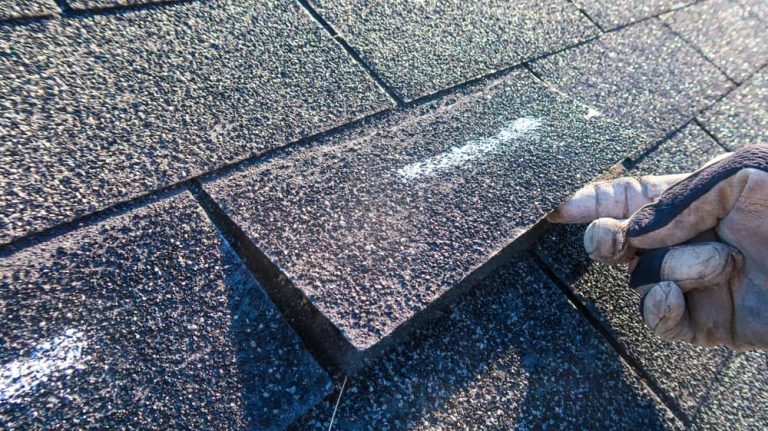
- Significant granule loss—Check your gutters after rainfall. Finding a small quantity of dark, sandy granules is normal in the first year after installation as loose surface material sheds. However, finding significant accumulation on a roof that’s been in place for more than a few years means that the asphalt layer beneath’s increasingly exposed to direct UV radiation. Bald or bare patches visible on the shingle surface from the ground confirm the same problem. Once granule loss becomes widespread, the degradation process accelerates. Clogged gutters trap granule accumulation and create water management failures that compound roof damage. Find out how clogged gutters cause roof leaks and get a better understanding of how the two systems interact.
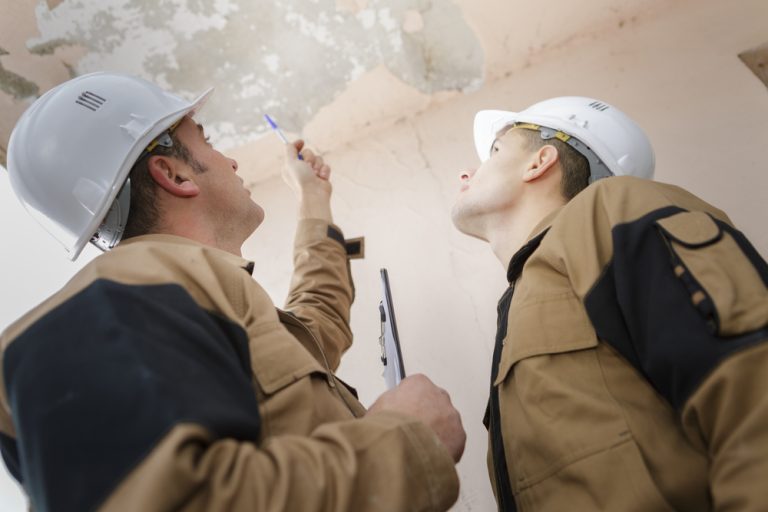
- Daylight visible from the attic—Go into your attic on a clear day and turn off any light source. If you can see points of light coming through the roof deck, water can pass through those same gaps. While in the attic, look for dark staining on rafters or decking, water trails indicating past intrusion and soft or spongy areas in the decking when pressed. All of these indicate that moisture has been reaching the structural layer.
- Sagging roof deck—A roof deck that visibly dips or sags between rafters has structural damage. Water has reached and compromised the wood to the point of deformation. This moves the situation from a roofing assessment to a structural assessment and makes the need for professional inspection immediate, not eventual.
- Multiple or recurring leaks—A single leak at a flashing failure or pipe penetration’s typically a repair. Multiple leaks appearing in different locations, or a previously repaired leak that returns in the same spot indicate that the roofing system itself’s failing rather than a single isolated component. Continuing to pursue repairs on a systemically failing roof’s almost always more expensive over time than replacement.
- Moss or lichen growth—Moss holds moisture against the shingle surface continuously. Lichen, the flatter, crusty growth, is harder to remove and works into the granule layer as it adheres. Widespread biological growth on a roof that’s past 15 years old indicates that the surface has been retaining moisture long enough to accelerate material breakdown from above.
- Damaged or missing flashing—Flashing seals the transition between the roof surface and vertical elements: chimneys, skylights, vents, dormers, and wall intersections. Flashing failures are among the most common causes of roof leaks in Alabama homes, especially after storm events. Cracked, separated, or missing flashing that requires repeated sealant application to control’s a sign that the roof assembly as a whole’s aging and losing integrity at its most vulnerable points.
- Age—A roof that’s past 20 years old and made of standard asphalt shingles warrants a professional assessment regardless of visible condition from the ground. Alabama’s climate produces damage that doesn’t announce itself from the driveway or from a casual attic walk-through. A professional inspection’s the only reliable way to know where the roof actually stands.
Repair or Replace: What Alabama Homeowners Should Consider
That’s the question that follows a storm event, attic inspection, or contractor visit more than any other. The answer depends on a combination of the roof’s age, the scope of the damage, and where the problem originated.
Repair makes sense when the roof’s less than 15 years old, the damage’s isolated to a specific area or single component whether a section of flashing, a few wind-lifted shingles, a single penetration that’s failed and also if the underlying decking’s sound. A younger roof with a contained problem’s a repair candidate.
Replacement makes sense when the roof’s past 18 to 20 years, when damage appears in multiple locations rather than a single point of failure, when the decking’s been compromised by moisture, or when the cost of necessary repairs exceeds 25 to 30 percent of replacement cost. At that threshold, you’re spending money on repairs to a system that still requires full replacement within a few years, often sooner than anticipated if Alabama’s storm seasons continue to apply pressure.
The calculation’s always a function of remaining useful life. Spending money to repair a 10-year-old roof that has 12 to 15 years ahead of it is sound. But spending the same money to repair a 22-year-old roof that has 2 to 4 years of reliable performance remaining is poor math that rarely looks better in hindsight.
For more details, look at what roof replacement costs in Alabama for different roofing materials and home sizes.
Best Time of Year to Replace a Roof in Alabama
Asphalt shingles are temperature-sensitive during installation; the adhesive strips that bond one shingle to the next require ambient warmth to activate properly, and extreme heat creates its own installation challenges. Alabama’s seasonal pattern allows two time periods when temperature, contractor availability, and installation conditions align well as well as two periods of time when one or more of those factors works against you.
Strategically timing a roof replacement in Alabama affects both installation quality and your ability to get on a reputable contractor’s schedule at a reasonable lead time.
Late Spring: April to June
This is the best time period for a roof replacement in Alabama. Temperatures are warm enough for asphalt shingles to seal properly as the adhesive strips on architectural shingles activate reliably above 40 degrees Fahrenheit without the extreme summer heat that slows installation and creates safety challenges for crews. Demand begins rising in April so it would be wise to schedule three to five weeks ahead.
Early Fall: September through October
The second-best period of time for replacing your roof in Alamaba, it’s when our summer heat has eased. As a result, conditions are favorable for installation, and your new roof will be positioned to handle whatever winter weather brings. Contractor schedules are somewhat less compressed than spring though this varies by year depending on how active the preceding storm season has been.
Summer: July to August
This time period’s workable, but extreme heat affects installation pacing and crew scheduling. Quality contractors manage it with early morning start times and appropriate planning, but you should discuss when scheduling during peak heat months.
Winter: November to March
This period of time’s more viable in Alabama than in northern states, but North Alabama homeowners may encounter delays when temperatures drop below 40 degrees for extended stretches. Central and south Alabama are less affected by this limitation.
The most underappreciated timing consideration: if you know your roof is within three to five years of needing replacement, getting ahead of that timeline works in your favor. Replacing a roof on a planned schedule while it still has some functional life remaining allows you to collect multiple estimates, choose materials thoughtfully, schedule during a favorable window, and avoid the premium that pressure-driven timelines tend to produce.
Choosing a Roofing Contractor in Birmingham or Huntsville
The shingles on your roof are only as good as the installation beneath them. Faulty workmanship’s one of the most common reasons that Alabama roofs fail years ahead of schedule. It’s a problem that shows up in the attic and the decking long before it shows up on the surface. If you’re in the Birmingham area, take a look at how we handle roof replacement in Birmingham. Homeowners in the Huntsville area can learn about roof replacement in Huntsville.
Before you sign anything, run through the following checklist:
- Verify the contractor’s insurance—Before anyone gets on your roof, ask for proof of general liability and workers’ compensation coverage. The Alabama Licensing Board for General Contractors has a searchable online database to confirm licensing status.
- Know how to spot storm-chasers—High-pressure door-to-door solicitation after a hail or wind event’s the calling card of out-of-town crews who won’t be around to honor their work. Local contractors in Birmingham and Huntsville have ongoing community reputations at stake.
- Ask how the contractor handles ventilation—Attic ventilation’s a direct driver of roof longevity in Alabama’s heat and humidity. A contractor who treats it as an afterthought is leaving performance on the table.
- Get multiple, itemized written estimates—Each bid should break out tear-off, underlayment, ice and water shield, decking repair, and cleanup separately so you’re comparing equivalent scopes of work..
- Ask about manufacturer certifications—Certified contractors through programs from GAF, Owens Corning, CertainTeed, and others can offer extended warranty coverage that uncertified installers can’t.
- Read recent local reviews—Feedback from homeowners in your part of Jefferson County or Shelby County if you’re in the Birmingham area, or, if you’re in the Huntsville area, Madison County or Limestone, Morgan, and Marshall counties will tell you more than aggregate ratings from across our state.
If storm damage’s involved, your homeowners insurance may cover part or all of the replacement. Carefully document the damage with photos and report it promptly. Browse our Alabama roof replacement services to see materials and warranty options before requesting a quote.
If you’re ready to consider replacing your roof, request a free in-home consultation.
Reference Sources:
- Alabama Licensing Board for General Contractors: License Roster Search
- ENERGY STAR®: Cool Roofs
- National Oceanic and Atmospheric Administration (NOAA): National Centers for Environmental Information (NCEI): Storm Events Database: Alabama
- National Oceanic and Atmospheric Administration (NOAA): NOAA Atlas 14 Point Precipitation Frequency Estimates: AL
- National Roofing Contractors Association (NRCA): Roofing Guidelines
- National Weather Service: Forecast Office: Birmingham, AL
- National Weather Service: Forecast Office: Huntsville, AL
- State of Alabama Home Builders Licensure Board: How to Protect Yourself from Fraudulent and Unlicensed Builders
- U.S. Environmental Protection Agency (EPA): Heat Island Effect
Frequently Asked Questions (FAQ) about When to Replace a Roof in Alabama
Take a look at our answers to the questions Alabama homeowners ask most often about roof replacement timing.
How long does a roof last in Alabama compared to national averages?
For architectural asphalt shingles, the most common material on Alabama homes, expect 20-25 years of reliable performance. Standard 3-tab shingles last 15-18 years. Metal roofing endures 40-70 years. These are Alabama-adjusted figures; national manufacturer warranties typically run 5-10 years longer than what Alabama’s climate reliably supports.
Does location within Alabama affect how fast a roof ages?
Yes. North Alabama, which includes the Tennessee Valley communities near Huntsville and the Birmingham metro area, experiences more frequent hail events and more severe tornado and straight-line wind activity than the southern part of our state. Those physical impacts compound the UV and humidity wear that affects roofs statewide. Homeowners in hail-prone North Alabama get additional value from impact-resistant shingles that homeowners in southern Alabama may not need to prioritize as highly.
Can I add new shingles over my existing roof?
Alabama building codes generally permit one layer of new shingles over an existing layer, subject to local jurisdiction requirements. This approach costs less upfront, but prevents inspection of the underlying decking, adds structural weight, and typically produces a shorter installation lifespan than a full tear-off. Most experienced contractors recommend full removal so that they can inspect the decking and in order to replace any compromised sections before new materials are installed.
How do I know if recent storm damage requires replacement vs. repair?
Hail damage’s often invisible from the ground. After a significant storm, check metal surfaces: gutters, downspouts, heating, ventilation, and air conditioning (HVAC) equipment for impact marks. If metal components show denting, the roof likely sustained impact as well. Granule accumulation in gutters following a storm, missing or lifted shingles at roof edges, and displaced ridge caps are additional indicators that merit a professional assessment. A ground-level visual’s an insufficient substitute for an actual roof inspection after a severe weather event.
How does Alabama roof replacement timing compare to what homeowners in neighboring states face?
The underlying factors are similar across the Southeast: heat, humidity, severe weather, and UV exposure all reduce roofing lifespans below national averages throughout our region. Alabama’s hail frequency and tornado activity make it somewhat more aggressive on roofing materials than the Carolinas or coastal Georgia and comparable to Tennessee’s more storm-active areas.
What should I do after a major storm passes through my area?
Do a visual check from the ground and look for obvious missing shingles, displaced ridge caps, or debris on the roof surface. Then check the attic for any new daylight, water staining, or moisture. If you observe any of these warning signs or if the storm produced large hail or winds above 60 mph, schedule a professional inspection. The damage that matters most after an Alabama storm frequently goes undetected until a contractor examines the shingle surface directly from the roof.
Your Roof Won’t Wait, and Neither Should You
An Alabama roof past 20 years, having survived through multiple storm seasons, or showing two or more of the warning signs covered above is a roof to plan around proactively, before a spring storm makes the decision for you.
The difference between a planned roof replacement and an emergency replacement consists of thousands of dollars, weeks off your schedule, and the ability to make a thoughtful choice of materials under no pressure. Getting ahead of it is almost always the better outcome.
Pinnacle Home Improvements is proud to maintain an A+ rating with the Better Business Bureau (BBB). We’ve also been recognized with awards as best roofing contractor of 2026 as well as “best exterior remodeler in 2026.”
Request an appointment today, and we’ll come to your home to look at your roof, assess its condition, explain your repair-vs.-replacement options, and give you a clear written estimate with no obligation to move forward.