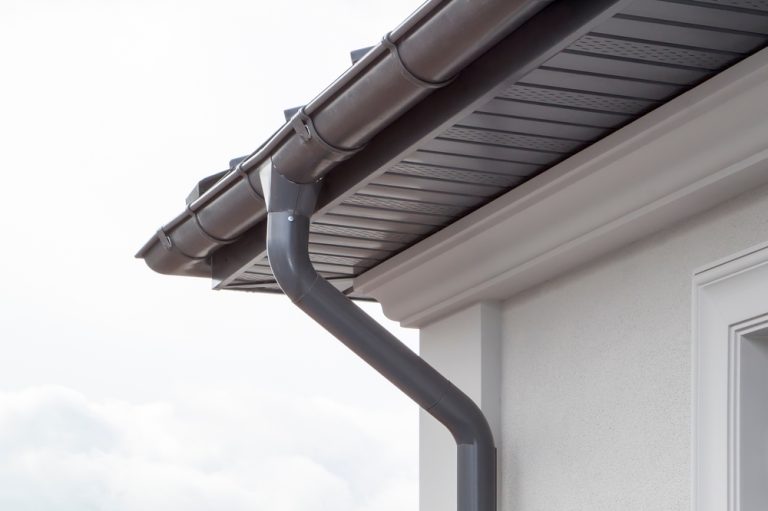










Custom-fabricated rain gutters formed on-site from a single continuous piece of metal, seamless gutters eliminate the seams that cause most gutter failures. For homeowners in Alabama, Georgia, North Carolina, and Tennessee, where rainfall’s heavy and storm seasons are intense, they’re the most reliable drainage solution available.
Key Takeaways
Seamless gutters are cut from a single piece of metal on-site, with joints only at corners and downspouts, typically 4-6 per home vs. 15-20 on sectional systems.
Fewer joints means fewer leaks, less debris buildup, and less maintenance over time.
Aluminum’s the most popular material for seamless gutters and the best choice for most Southeast homes.
Seamless gutters cost more upfront than sectional gutters, generally 30-50% more, but typically cost less over their full lifespan.
Professional installation’s required because the gutters are formed using a portable roll-forming machine that only trained contractors know how to operate.
The Southeast’s rainfall levels make seamless gutters worthwhile as our region averages 50-60 inches of rain per year, well above the national average.
Choosing a licensed, insured contractor matters as much as choosing the right gutter material.
Stop for a moment and think about the last time it rained hard at your house. A proper Southeast downpour, the kind that comes in sideways off the mountains in Knoxville or rolls through Charlotte in July with almost no warning. Now think about what your gutters were doing during that rain. If they’re sectional gutters with 15 or 20 joints running along your roofline, the answer’s leaking somewhere in at least one of those spots.
That’s not a small problem. It’s the difference between water draining safely away from your foundation and water pooling against it for years, gradually causing damage that costs thousands of dollars to repair. Seamless gutters exist to solve exactly that problem.
What Are Seamless Gutters?
Seamless gutters are rain gutters fabricated from a single, continuous piece of metal, most often aluminum, that runs the full length of your roofline without any seams or joints along its span. The way it’s done is that a contractor brings a portable gutter-forming machine to your property, feeds a flat coil of metal through it, and produces a gutter channel cut to your home’s exact dimensions on the spot.
The only connection points in a seamless system are in places where a joint’s structurally unavoidable: at the corners, end caps, and downspout outlets. On a typical home, that amounts to four to six connection points total. By comparison, traditional sectional gutters, the kind sold in precut lengths at hardware stores, have a joint every 10 to 20 feet, producing 15 to 20 or more potential failure points on the same home.
That distinction makes the case for seamless gutters.
How Seamless Gutters Are Made
The installation process for seamless gutters is different from that of any other type of gutter, which is why it always requires a professional installation.
A trained technician begins by measuring the full perimeter of your roofline where gutters are needed. Those exact measurements are programmed into a portable roll-forming machine, often truck-mounted, which takes flat metal coil stock and bends it into a continuous gutter profile as it feeds through.
The two most common profiles are K-style and half-round. K-style gutters have a flat back and a decorative front profile that resembles crown molding. Common on older or historic homes, half-round gutters are exactly what they sound like: a curved trough.
Once the gutter’s formed to length, the installer attaches it to your fascia board using hidden hangers or brackets spaced 18 to 24 inches apart. The gutter’s pitched, angled slightly, toward each downspout at approximately ¼ inch of slope per 10 feet of run so that water will flow consistently without pooling. Then the gutter installer seals corner pieces, end caps, and downspout outlets with professional-grade sealant.
For a standard single-story home, a professional crew completes the full installation in four to eight hours. Two-story homes or homes with complex rooflines like multiple gables, dormers, and valleys take longer and typically cost more due to the additional labor and equipment required.
Seamless Gutters versus Sectional Gutters: Key Differences
When you compare seamless and sectional gutters, it almost always comes down to upfront cost versus long-term performance. Sectional gutters cost less to buy and install while seamless gutters cost less to own over the full life of the system.
Here’s how they compare across the factors that matter most:
- Leak risk—Every joint in a sectional gutter system relies on sealant, but sealant dries out and cracks. The Southeast’s temperature swings, from cold snaps in Chattanooga in January to 95-degree humidity in Atlanta in August, accelerate that deterioration. Seamless gutters eliminate joints along the entire gutter run, reducing the leak points on an average home from 15 to 20 down to four to six.
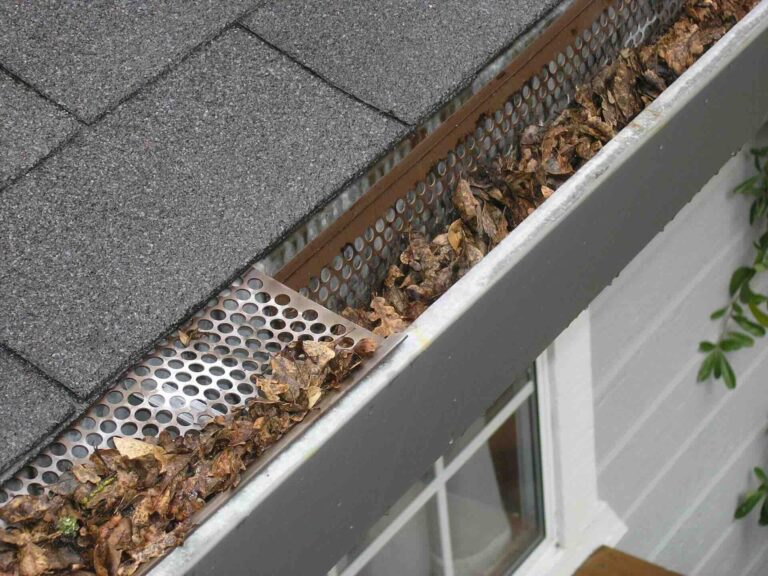
- Maintenance—Debris such as leaves, pine needles, and shingle grit catches at joints. In the Southeast, where pine trees are everywhere and leaf fall’s heavy, sectional gutters need cleaning more often than seamless ones. Seamless gutters still require cleaning, but the runs stay cleaner longer between sessions.
- Lifespan—Aluminum seamless gutters last 20 to 30 years whereas sectional aluminum gutters of comparable quality typically last 15 to 20. The difference comes from having fewer stress points where corrosion and fatigue accumulate over time.
- Appearance—Seamless gutters create a clean, unbroken line along your roofline. Sectional gutters have visible connectors at every joint that become more noticeable as the sealant ages and darkens. This matters especially for homeowners in Alpharetta, Raleigh, or Nashville who are attentive to curb appeal.
- Repairs—This is where sectional gutters have an advantage. If a 10-foot section of sectional gutter’s damaged, you replace just that section. But if a run of seamless gutter’s damaged, the repair may require replacing a longer section, and a professional must do it. That said, seamless gutters require fewer repairs overall so this disadvantage rarely outweighs the benefits.
Why the Southeast Makes the Gutter Decision Important
Not every region of the country gets the kind of rainfall that the Southeast does. According to the National Oceanic and Atmospheric Administration (NOAA), Birmingham, Alabama averages about 54 inches of rainfall per year. Knoxville, Tennessee averages 47 inches. Charlotte, North Carolina averages 44 inches. All of these are well above the national average of approximately 38 inches annually.
That volume of water, falling on a typical residential roofline, generates hydraulic pressure through your gutter system. You can now see why a gutter with 18 joints is under far more sustained stress than one with only five.
The Southeast’s storm patterns add another layer. Our region sees regular convective storms: fast-moving, high-intensity events that can drop an inch of rain in just 20 minutes. According to the Federal Emergency Management Agency (FEMA), foundation drainage failures are among the leading causes of residential water damage claims, and a significant portion of those failures originate at compromised gutter systems. Gutters that hold, seal, and channel water efficiently during a sudden downpour comprise infrastructure rather than luxury in our climate.
There’s also the pine needle factor. Homeowners in Huntsville, Chattanooga, and the mountain communities of western North Carolina have to deal with pine needles year-round. Pine needles are narrow enough to slip past many gutter guard systems and dense enough to form compacted mats inside gutter channels. In sectional gutters, those mats anchor themselves at every joint. In seamless gutters, the interior’s smooth and uninterrupted, which makes cleaning faster and clogging less likely. For more on choosing the right protection from debris, see our guide to the best gutter guards for Southeast homes.
What Are Seamless Gutters Made of?
Material choice determines cost, lifespan, appearance, and how well your gutters hold up to the Southeast’s specific conditions. The most common options are:
- Aluminum—The right choice for most Southeast homes, aluminum’s lightweight, rust-resistant, and available in a wide range of factory-applied colors to match your exterior. Aluminum seamless gutters last 20 to 30 years, handle the region’s rainfall and humidity without corroding, and represent the best value across all materials. For a detailed side-by-side look at how aluminum stacks up against premium alternatives, see our post on aluminum vs. copper gutters in the Southeast.
- Copper—The premium choice, copper gutters develop a distinctive patina over time, last 50 years or more, and require minimal maintenance. Copper gutters make sense for high-value homes in Nashville’s Belle Meade neighborhood, in Atlanta’s historic Druid Hills, or on custom homes in Raleigh’s North Hills. The cost’s significantly higher than aluminum, but the investment holds for the right property.
- Galvanized steel—Heavier and stronger than aluminum, steel has better resistance to denting from falling branches. It’s a good option in areas with heavy tree canopy, common in the foothills of western North Carolina or the wooded suburbs of Birmingham. The trade-offs are weight and long-term rust risk, even with galvanizing. The lifespan for steel gutters is 15 to 20 years with proper maintenance.
- Zinc—With a longevity similar to that of copper: 50-plus years, zinc shares copper’s self-protecting patina chemistry. The price point’s also similar to that of copper. Zinc gutters are less widely available than aluminum gutters in the Southeast, but are worth considering for architecturally distinctive homes where long-term material performance matters more than upfront cost.
- Vinyl—The least recommended material for Southeast climates, vinyl becomes brittle under ultraviolet (UV) exposure. It expands and contracts dramatically with temperature swings, and has a lifespan of only 10 to 15 years. The cost savings of vinyl gutters over aluminum gutters are modest while the performance gap’s significant.
How Much Do Seamless Gutters Cost?
Seamless gutter installation in the Southeast typically costs $6 to $12 per linear foot for aluminum, with most standard homes ranging from $900 to $2,500 total. Premium materials like copper or steel push that range higher.
Here are the cost and lifespan ranges by type of gutter material.
| MATERIAL | COST PER LINEAR FOOT (installed) | ESTIMATED TOTAL (150-200- foot home) | LIFESPAN |
|---|---|---|---|
| Aluminum | $6-12 | $900-2,400 | 20-30 years |
| Galvanized steel | $8-20 | $1,200-4,000 | 15-20 years |
| Copper | $25-50 | $3,750-10,000 | 50+ years |
| Zinc | $25-45 | $3,750-9,000 | 50+ years |
Several factors influence where your project falls within those ranges.
- Home size and gutter footage—Most homes require 150 to 200 linear feet of guttering. Every additional 100 feet adds approximately $600 to $1,200 for aluminum systems. Multistory homes carry a premium of $1 to $3 per foot for the added labor and safety equipment.
- Gutter size—Standard residential gutters are five inches wide. Given the Southeast’s rainfall intensity, many contractors recommend six-inch gutters for homes with steep roof pitches or large drainage areas. Six-inch gutters cost 20 to 30 percent more than five-inch gutters, but handle 40 percent more water volume, a sensible upgrade in high-rainfall areas like Charlotte or Atlanta.
- Roof complexity—A straightforward rectangular roofline costs less than one with multiple gables, dormers, and hips. More angles mean more corners, more custom cutting, and more labor hours.
- Old gutter removal—If an existing gutter system needs to be removed and disposed of first, you need to budget an additional $1 to $2 per linear foot or $150 to $300 for a typical home.
- Downspout placement—Proper downspout sizing and placement’s critical in high-rainfall climates. Undersized downspouts overflow even when gutters are clean and properly sloped. The National Association of Home Builders (NAHB) recommends one downspout per every 30 to 40 linear feet of gutter as a general residential standard though steeper roofs and larger drainage areas often warrant more.
According to the U.S. Environmental Protection Agency’s stormwater guidance, proper residential drainage systems, of which gutters are the first component, play a measurable role in reducing runoff-related erosion and property damage. Sizing your gutters correctly from the start’s far less expensive than addressing erosion or foundation settling afterward.
Pros and Cons of Seamless Gutters
Every home improvement decision involves compromises. Seamless gutters are the right choice for most Southeast homeowners, but there are some drawbacks.
Seamless gutters offer the following advantages that add up significantly over the life of the system.
- Dramatically fewer leak points—With only four to six joints per home instead of 15 to 20, seamless gutters eliminate the primary failure mode of traditional systems.
- Less maintenance over time—No snagging points for debris means cleaner gutters between service visits, which is important in a region with heavy leaf fall and pine needle accumulation.
- Longer lifespan—Aluminum seamless gutters outlast comparable sectional systems by approximately five to 10 years because they have fewer stress points where corrosion develops.
- Better curb appeal—A continuous, clean line along the roofline looks more finished than a sectional system with visible connectors every 10 feet. Available in 25-plus factory colors, seamless gutters can be matched precisely to the trim or fascia of your home.
- Custom fit—Every run’s fabricated to your home’s exact dimensions, eliminating the gaps and alignment issues that can compromise sectional installations.
Seamless gutters also come with limitations that need to be understood before you commit to a decision.
- Higher upfront cost—Expect to pay 30 to 50 percent more than sectional gutters for materials and installation combined. This is the most common reason for which homeowners hesitate.
- Professional installation’s nonnegotiable—You can’t do it yourself (DIY) when it comes to installing seamless gutters. The roll-forming machine required to fabricate them costs thousands of dollars and requires trained operation. Attempting to improvise this process voids any warranty and risks improper drainage pitch.
- Repairs require a professional—If a run of seamless gutter’s damaged by a falling branch or severe storm, a contractor needs to assess and repair it. You can’t just swap out a 10-foot section from a hardware store.
Are Seamless Gutters Worth It?
For most Southeast homeowners planning to stay in their home for five or more years, the answer is, “Yes, seamless gutters are worth the upfront investment.”
The math’s simple. Suppose you’re choosing between aluminum seamless gutters at $1,800 installed and sectional aluminum gutters at $1,200 installed. That $600 gap feels significant. But sectional gutters will need resealing every three to five years at the joints ($100 to $200 each time), more frequent cleaning due to debris accumulation, and periodic section replacements as joints fail. Over a decade, the total cost of ownership narrows considerably.
More importantly, the cost of what seamless gutters prevent far exceeds the price difference between systems. Foundation repairs in the Southeast start at $5,000 and routinely exceed $15,000. Fascia board replacement runs $6 to $20 per linear foot. Basement water intrusion remediation costs thousands more. As FEMA has documented in its guidance on residential flood mitigation, water management at the roofline’s the first and most cost-effective line of defense against moisture intrusion.
Seamless gutters are the right choice if you plan to stay in your home long-term, if your home has mature trees nearby, if you’ve had recurring gutter problems, or if you’re already replacing your roof and want to bundle the work. They may be less critical on a small home in a dry microclimate with short gutter runs, but that describes very few Southeast properties.
Seamless Gutters in the Southeast
Southeast states have similar climates: humid summers, heavy annual rainfall, and active storm seasons, but each state’s climate has its own set of conditions that make seamless gutters a practical choice for local homeowners.
Seamless Gutters in Alabama
Alabama’s one of the wettest states in the country. Birmingham averages 54 inches of rain per year and Huntsville averages 56 inches, according to NOAA; both are well above the national average, and both are concentrated in spring and early summer, which will test any gutter system under real pressure.
The Tennessee Valley microclimate around Huntsville generates frequent afternoon thunderstorms from April through September. Madison County’s in a region that sees some of the highest residential tornado activity in the U.S. so gutter systems take regular hits from wind-driven debris.
Alabama’s predominant soil type’s red clay, which has low permeability and sheds water instead of absorbing it. When gutters overflow or leak at a joint during a heavy rain event, that water hits clay soil and redirects immediately toward the foundation. Proper gutter function isn’t just about managing roof runoff in Alabama; it’s about keeping the zone immediately adjacent to your foundation from becoming saturated.
Pinnacle Home Improvements installs gutters in the Birmingham and Huntsville areas.
Seamless Gutters in Georgia
Atlanta averages about 50 inches of rain annually, and Alpharetta, one of the fastest-growing residential markets in the Southeast, is in a north Georgia landscape dominated by hardwood and pine canopy that sheds debris onto rooflines year-round. Atlanta’s urban heat island effect amplifies temperature swings, which accelerates the sealant degradation in sectional gutters faster than the surrounding suburbs experience.
Georgia’s heavy clay soils in the Piedmont region behave similarly to Alabama’s: water that escapes a failing gutter joint concentrates; it doesn’t disperse. Foundation issues tied to poor drainage are among the most common costly repairs reported by Georgia homeowners, and improperly functioning gutters are a contributing cause more often than homeowners realize.
Pinnacle Home Improvements installs gutters in the Atlanta area and other areas in Georgia.
Seamless Gutters in North Carolina
North Carolina’s climate varies more than the other three states in this region. Charlotte, in the Piedmont, averages 44 inches of rain annually and experiences the full force of tropical storm remnants that push inland from the Atlantic coast in late summer and fall.
Raleigh receives about 46 inches annually and experiences intense convective storms during the summer months that can deliver an inch or more of rain within a single hour, a drainage rate that overwhelms undersized or leaking gutter systems.
Western mountain communities: Asheville, Boone, and Hendersonville get among the highest rainfall totals in the entire eastern U.S., with some areas exceeding 70 inches per year. Homeowners in those communities often require six-inch gutters as a baseline rather than an upgrade. Steep rooflines common in mountain architecture accelerate drainage velocity even further.
Pinnacle Home Improvements installs gutters in the Charlotte and Raleigh areas.
Seamless Gutters in Tennessee
Tennessee runs the full range of Southeast climate conditions. Chattanooga’s one of the rainiest cities in the U.S., averaging 53 inches of rain annually. It’s in a geographic bowl formed by the Tennessee River and surrounding ridgelines that channels moisture and amplifies precipitation events.
Knoxville, at the edge of the Appalachian foothills, averages 47 inches and experiences significant debris loads from the dense hardwood forests that characterize the area.
Nashville averages 47 inches and has seen increases in high-intensity rainfall events over the past decade. The 2010 Nashville flood, a 1,000-year rain event, is an extreme example, but smaller-scale flash flooding driven by drainage failures is a documented annual occurrence across Middle Tennessee.
Gutters that hold, seal, and channel water toward downspouts efficiently are a basic element of residential water management in all three of these areas. Pinnacle Home Improvements installs gutters in Chattanooga, Knoxville, Nashville, and other areas in Tennessee.
What to Look for When Hiring a Seamless Gutter Installer
The quality of your seamless gutters depends as much on installation as on materials used. A seamless gutter fabricated from quality aluminum but hung at the wrong pitch, with improperly spaced hangers, will fail early regardless of what the material spec sheet says.
When evaluating a contractor, look at the following factors:
- Licensing and insurance—Any contractor working on your home should carry general liability insurance and, where required by your state, a contractor’s license. Alabama, Georgia, North Carolina, and Tennessee each has licensing requirements for home improvement work. Ask for proof before signing anything.
- On-site fabrication—A legitimate seamless gutter installer brings a roll-forming machine to your property and fabricates your gutters to your exact measurements. If a contractor shows up with precut gutter sections, they’re not installing seamless gutters; they’re installing sectional gutters.
- Material specification—Ask what gauge aluminum they use. Most residential seamless gutters are fabricated from .027-gauge aluminum. Higher-quality installations use .032-gauge, which is stiffer, more dent-resistant, and better suited to the Southeast’s occasional hail storms.
- Hanger spacing—Hidden hangers should be spaced no more than 24 inches apart, and closer in areas with heavy debris loads or ice. Widely spaced hangers allow gutters to sag over time, which compromises drainage pitch and eventually pulls the gutter away from the fascia.
- Downspout sizing and placement—A knowledgeable installer evaluates your roof’s drainage areas and recommends appropriate downspout diameter and placement. In high-rainfall Southeast areas, undersized downspouts are a common and preventable failure mode.
- Written estimate and warranty—Get everything in writing: scope, materials, timeline, and warranty terms. Reputable installers stand behind their work and the materials they use.
Reference sources:
- Alabama Licensing Board for General Contractors: License Roster Search
- Georgia Professional Licensing Boards Division: Professional Licensee Search
- National Association of Home Builders (NAHB): Rain & Groundwater Management: Reducing the Risk of Water Intrusion & Damage
- National Oceanic and Atmospheric Administration (NOAA): National Centers for Environmental Information (NCEI): Precipitation
- North Carolina Licensing Board for General Contractors: Verify License/Qualifier Search
- Tennessee Department of Commerce & Insurance: Licensing & Regulations
- U.S. Department of Energy (DOE): Gutters and Downspouts
- U.S. Department of Housing and Urban Development (HUD) User: Building Moisture and Durability: Past, Present, and Future Work
Frequently Asked Questions (FAQ) about When to Replace a Roof in North Carolina
Homeowners across Alabama, Georgia, North Carolina, and Tennessee ask many of the same questions about seamless gutters before deciding to move forward. The answers below address the most common ones.
Do seamless gutters not leak?
Seamless gutters leak far less than sectional gutters, but no gutter system’s entirely leak-proof forever. The joints at corners and downspout outlets are sealed with professional-grade sealant during installation. With quality materials and proper installation, those joints stay watertight for many years. The most common issue’s sealant degradation at corners, but it usually takes 10 or more years to develop and is easily repaired.
Can I install seamless gutters myself?
No. Seamless gutters are fabricated on-site using a portable roll-forming machine that costs thousands of dollars and requires training to operate. Unlike sectional gutters, which are sold in precut lengths at home improvement stores, seamless gutters don’t exist as a product that you can purchase and hang yourself. DIY attempts typically result in improper drainage pitch and voided warranties.
How often do seamless gutters need to be cleaned?
Most homes benefit from cleaning twice a year: once in late spring and once in late fall after leaves have dropped. Homes with significant tree canopy, especially homes near pine trees, which shed needles year-round in the Southeast, may need a third cleaning. Adding gutter guards can reduce cleaning frequency substantially. Our gutter maintenance tips blog post covers seasonal cleaning schedules in detail.
What size gutters should I choose: 5-inch or 6-inch?
For most Southeast homes, 5-inch K-style gutters adequately handle typical rainfall. However, you should consider upgrading to 6-inch gutters if your home has a steep roof pitch, a large roof footprint, or sits in a high-rainfall area. Nashville, Charlotte, and Atlanta get enough annual rainfall that homeowners in these areas should ponder getting 6-inch gutters as a default rather than an upgrade.
Will seamless gutters work with gutter guards?
Yes, and they pair well. Seamless gutters provide the smooth, uninterrupted channel that micromesh and reverse-curve guards work best on. If you’re installing new seamless gutters, considering adding guards at the same time in order to reduce the total number of service visits over the system’s life.
Do clogged gutters damage my roof?
Yes, water that backs up in a clogged gutter can work its way under roof shingles, damage fascia boards, and contribute to soffit rot. Our post on how clogged gutters cause roof leaks explains how this happens and what repair costs look like.
How do I find a good seamless gutter installer in my area?
Start by asking neighbors and checking verified reviews. Look for contractors who fabricate on-site, carry insurance, specify material gauge, and provide written estimates with warranty terms. Pinnacle Home Improvements serves homeowners throughout Alabama, Georgia, North Carolina, and Tennessee, in communities from Birmingham and Huntsville to Atlanta and Alpharetta, from Charlotte and Raleigh to Chattanooga, Knoxville, and Nashville. Schedule your free estimate today.
Stop Patching Leaks and Start Protecting What Matters
Seamless gutters are the most reliable, lowest-maintenance gutter system available for residential homes. In the Southeast, where rainfall’s heavy, storm seasons are relentless, and pine trees drop needles year-round, reliability matters more than it does almost anywhere else in the country.
Although they cost more upfront than sectional gutters and require professional installation, seamless gutters protect your home more effectively over their full lifespan, making them the smarter long-term investment for most homeowners in Alabama, Georgia, North Carolina, and Tennessee.
Pinnacle Home Improvements is proud to maintain an A+ rating with the Better Business Bureau (BBB). We’ve also been recognized with awards such as “best exterior remodeler in 2026.”
Request an appointment today, and we’ll come to look at your home’s gutters, assess their condition, explain your options, and give you a clear written estimate with no obligation to move forward.